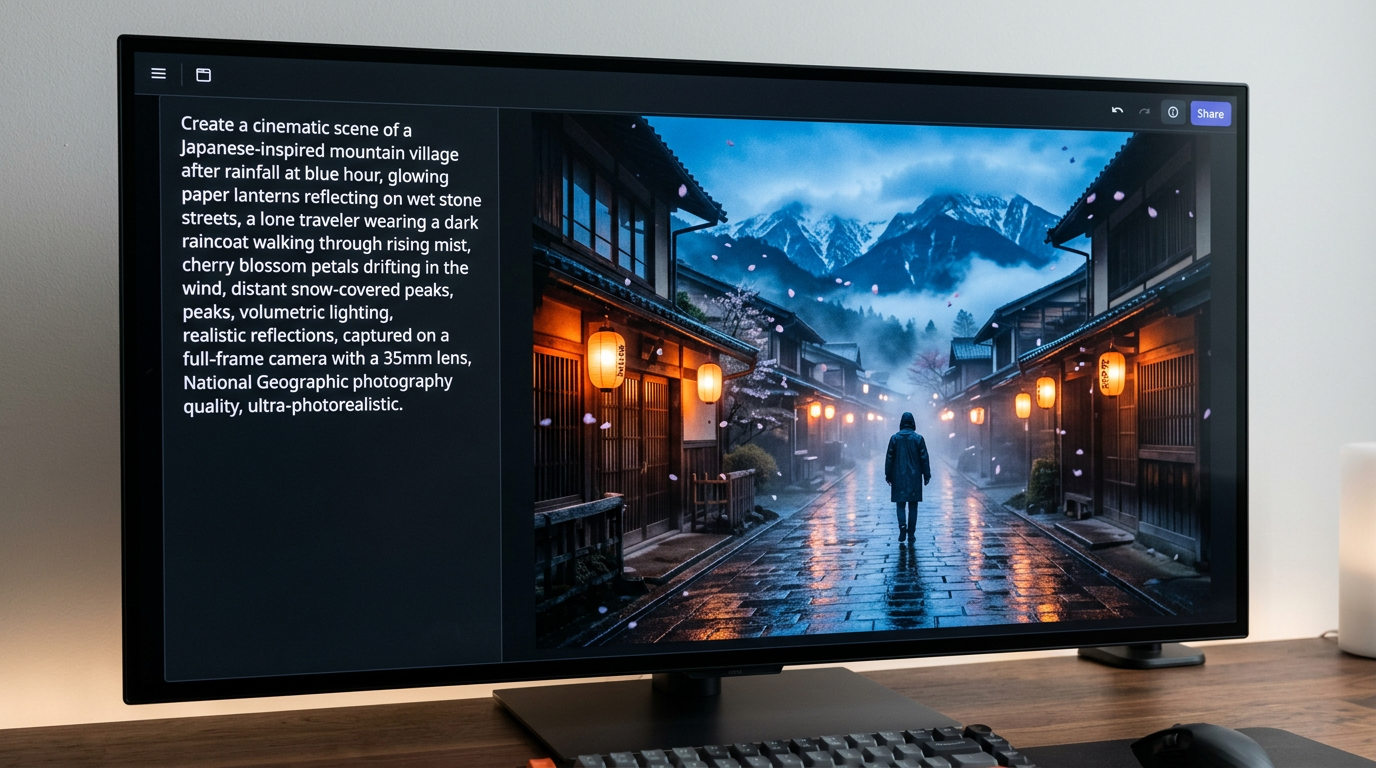
Google Nano Banana 2 Lite vs Nano Banana 2 Comparative Analysis: The Optimal Choice Guide for Enterprises and Developers
Released on June 30, 2026, the Nano Banana 2 Lite is changing the landscape of the AI image market with generation speeds in the 4-second range and breakthrough pricing. We provide a detailed analysis of which model is better suited for business workflows compared to the existing Nano Banana 2.
Google officially launched Nano Banana 2 Lite on June 30, 2026, redefining efficiency standards in the AI image generation market. This release is interpreted as Google's strategic choice to simultaneously satisfy users who value high-resolution output quality and business needs for immediate mass image generation. Unlike Nano Banana 2, which has become the market standard since its launch last February, the Lite model has shortened generation speed to the 4-second range, opening up the possibility of real-time workflows.
Unveiled alongside Gemini 3.1 Omni Flash, this model is immediately accessible via Google AI Studio and the Gemini API. In particular, as support begins on enterprise platforms, the introduction of large-scale automation processes in marketing and design is expected to accelerate. As of July 2026, developers are faced with a clear choice between speed and quality depending on the nature of their projects.
As of 2026, Google's image generation model hierarchy is divided into three tiers: Nano Banana 2 Lite, Nano Banana 2, and Nano Banana Pro. The Lite model has the official name 'Gemini 3.1 Flash Lite Image' and is designed for ultra-low latency and high cost-efficiency. This maintains the general-purpose performance provided by the existing Nano Banana 2 while maximizing processing speed for specific tasks.
Nano Banana 2 Lite is not simply a low-end model with reduced performance, but a new tool optimized for speed and iterative design derivation.
In terms of speed, Nano Banana 2 Lite records a generation time of approximately 4 seconds, showing overwhelming performance compared to existing models. Compared to the standard Nano Banana 2, which takes about 20 seconds to generate a 1K resolution image, it is a whopping 5 times faster. This performance improvement dramatically increases work efficiency by enabling 'near real-time' work where designers can immediately visualize and modify ideas.
Economic Analysis: Cost Comparison per 1,000 Images
Cost efficiency is also a core competitive advantage of the Lite model. The generation cost per 1,000 images is set at approximately $0.034, which is about 50% cheaper compared to Nano Banana 2's $0.067. For companies undertaking large-scale projects that generate 1 million images, using the Lite model can lead to significant cost savings, providing a strong advantage in mass production environments.
- Official Model ID: gemini-3.1-flash-lite-image
- Generation Speed: Approx. 4.0 seconds based on 1K resolution
- Supported Specifications: Supports 14 aspect ratios and 1K resolution output
- Available Platforms: Google AI Studio, Gemini API, Enterprise Agent Platform
Analyzing the balance between quality and efficiency, the Lite model achieved remarkable results in specific benchmarks. According to K-Dense's scientific image generation benchmark, Nano Banana 2 Lite scored 76.9 points in terms of subject consistency and technical accuracy, taking first place ahead of the standard model (63.3 points) and the Pro model (59.1 points). This suggests that the Lite model may be more advantageous for tasks where structural accuracy is more important than complex artistic depiction.
On the other hand, for cases requiring photorealistic texture expression or complex lighting effects at a final publication level, choosing the higher-tier Nano Banana 2 or Pro model is still recommended. Since the Lite model tends to sacrifice some fine details for speed, users need the discernment to select the appropriate model based on the intended use of the output. Especially for brand campaigns requiring high artistic perfection, the value of the higher-tier models remains valid.
If you are not satisfied with the performance of the Lite model, upgrading to Nano Banana Pro can be an alternative. While the Pro model guarantees the highest precision and artistic perfection, it must be considered that the generation speed is relatively slower and the cost is higher. Therefore, a hybrid approach—using the Lite model to quickly check drafts during the initial planning stage of a project and using a higher-tier model only for the final output—is considered an efficient strategy.
In conclusion, Nano Banana 2 Lite is a solution optimized for high-volume workflows that prioritize speed and cost. In the early stages of design where iterative revisions are frequent, or in marketing fields requiring mass content generation, it is wise to reduce costs through the Lite model. Conversely, for professional photographers or artists who need to extract the best quality from a single image, models above Nano Banana 2, released last February, remain valid options.
Nano Banana 2 Lite offers a 5x speed improvement over the standard model.

This content is for information and commentary only and is not investment advice.
Join the reader conversation
Read reactions to this article and leave your own note.