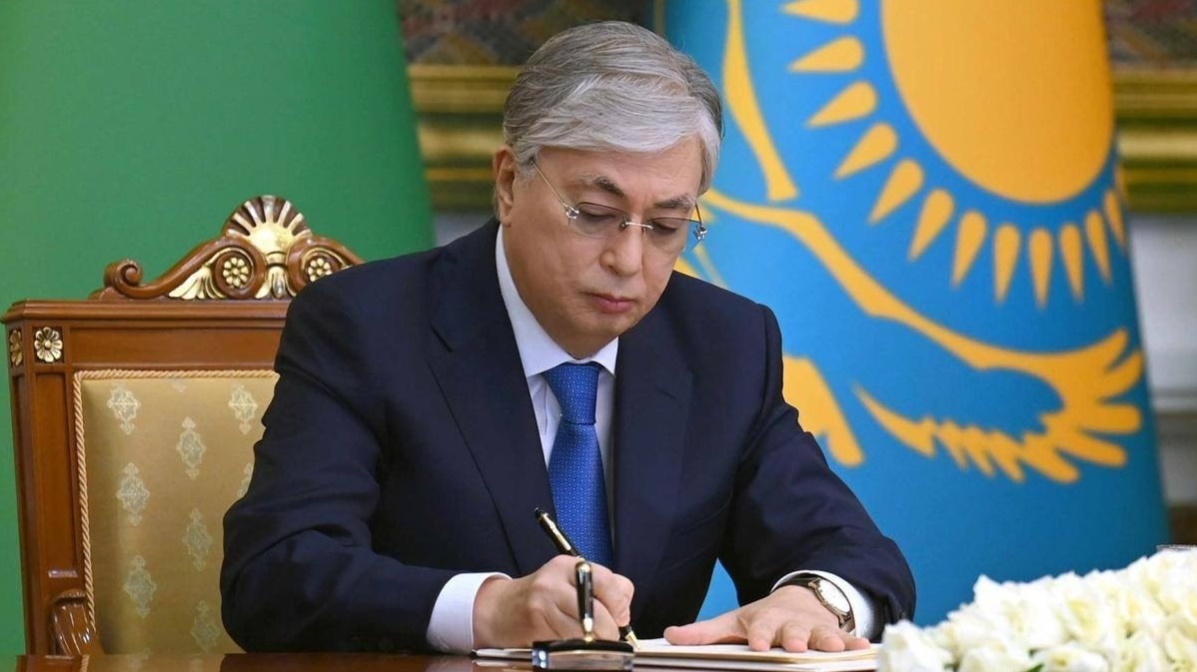
Kazakhstan President Tokayev Signs Decree to Accelerate Virtual Asset Industry Development: Strategic Shift Across Energy, Taxation, and Payments
Kazakhstan President Kassym-Jomart Tokayev signed a historic decree on July 7, 2026, to stimulate and develop the virtual asset industry. The measure focuses on prioritizing gas-based power supply, tax exemptions for transactions within the regulatory framework, and allowing cross-border payments using stablecoins, reflecting a strong commitment to restoring Kazakhstan's status as a global blockchain hub that had once declined.
On July 7, 2026, President Kassym-Jomart Tokayev of Kazakhstan signed a presidential decree titled "Measures for the Stimulation and Development of the Virtual Asset Industry." Announced through the Akorda presidential office, this decree is interpreted as a decisive signal to end the era of energy restrictions and fragmented regulations that have pressured Kazakhstan's virtual asset mining industry.
The core of this policy is to prioritize the allocation of gas-generated power to mining and provide unprecedented tax benefits for virtual asset transactions conducted within the institutional framework. This is a strategic national shift aimed at regaining Kazakhstan's global market share, which had been on a downward trend since 2023 due to energy infrastructure vulnerabilities.
According to the Akorda press office, the purpose of this presidential decree is to establish an integrated development strategy to systematically foster the virtual asset industry. The government explained that it aims to move away from the existing decentralized regulatory system and establish a more solid legal foundation for the digital economy.
This decree will contribute to elevating Kazakhstan's digital asset ecosystem to a world-class level and strengthening a unique jurisdiction to attract global capital leaders.
To resolve the energy crisis, the Kazakh government is making a technical pivot by shifting the power source for mining from coal-based to gas-generated power. While excessive reliance on coal-based power and the resulting energy cap system were major factors weakening Kazakhstan's mining competitiveness in the past, the government plans to ensure the stability of the national power grid while promoting industrial growth through the priority allocation of gas power.
Tax Benefits and Vitalization of Institutional Trading
Under the new tax reform, a 15% tax rate applies to virtual asset mining income, but extensive income tax exemptions are provided for regulated transactions conducted through authorized exchanges. This 'carrot and stick' strategy is a measure to incorporate underground virtual asset transactions into the formal economic system and create a transparent market environment.
- Priority allocation of gas-generated power for mining operations
- Income tax exemption for regulated virtual asset transactions
- Official permission for cross-border payments using stablecoins
- Mandatory asset sales through authorized domestic exchanges
In particular, this decree is drawing attention for officially approving international payments using stablecoins. This is a move to position Kazakhstan as a digital commerce bridgehead in Central Asia and is expected to serve as an opportunity to increase the practical utility of virtual assets in cross-border trade.
As of July 2026, Kazakhstan's share of the global Bitcoin hashrate is between approximately 13% and 15%, maintaining its position as the world's 2nd or 3rd largest after the United States. However, as the market share, which surged after China's mining ban, has been under continuous pressure due to energy shortages and strengthened regulations, this presidential decree is evaluated as an essential intervention to prevent a decline in market share.
Digital Code and Regulatory Maturity
This measure is in line with the recently introduced 'Digital Code' and the regulatory framework of the National Bank of Kazakhstan. With the issuance of licenses for unsecured digital asset exchange operators starting on May 1, 2026, Kazakhstan is increasing its legal maturity across the entire virtual asset distribution process.
President Tokayev emphasized asset tokenization and the vitalization of virtual asset exchanges using the special status of the Astana International Financial Centre (AIFC) at the 38th plenary session of the Foreign Investors' Council (FIC). This decree is expected to materialize this vision, serving as a catalyst to attract global capital and modernize national infrastructure.
In conclusion, Kazakhstan's latest move goes beyond simple deregulation and is a clear expression of its intent to make virtual assets a new growth engine for the national economy. It remains to be seen whether this policy, which combines technical solutions for energy supply and demand with tax incentives, can restore the confidence of global investors and return Kazakhstan to its position as a global center for the mining and blockchain industries.
| Country/Region | Approximate Share of Global Hashrate |
|---|---|
| United States | 35% to 40% |
| Kazakhstan | 13% to 15% |
| China | 10% to 12% |
| Canada | 8% to 10% |
| Russia | 4% to 7% |
| Others | 6% to 10% |
Kazakhstan maintains a significant but pressured share of the global mining market.



This content is for information and commentary only and is not investment advice.
Join the reader conversation
Read reactions to this article and leave your own note.