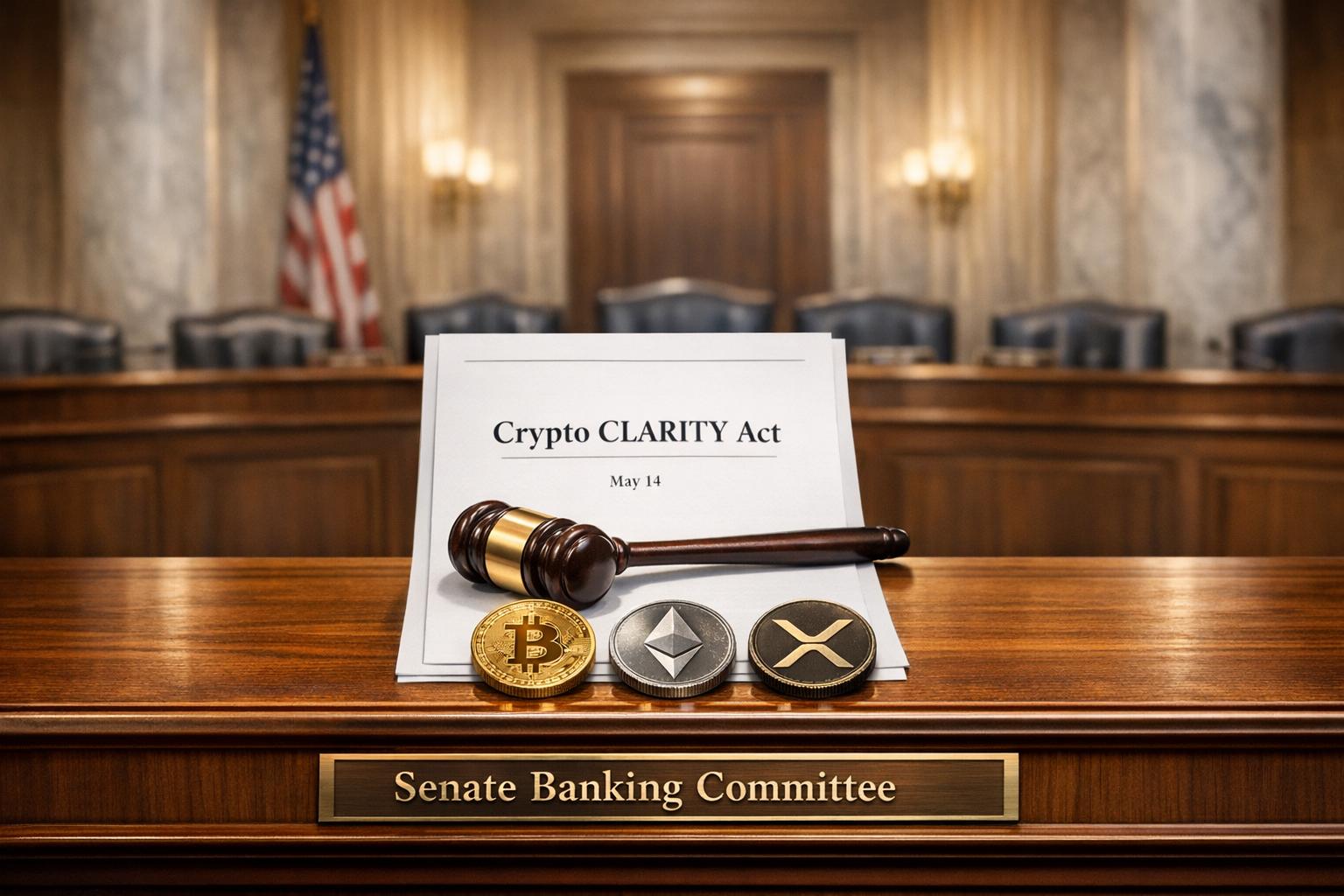
US Senate Banking Committee Passes 'CLARITY Act'... Bitcoin Surpasses $82,000
On May 14, 2026, the US Senate Banking Committee passed the 'CLARITY Act,' which defines the structure of the digital asset market. Following this news, Bitcoin hit an all-time high of $82,000, reflecting market enthusiasm.
On Thursday, May 14, 2026 (local time), the U.S. Senate Banking Committee passed the 'Digital Asset Market CLARITY Act' with 15 votes in favor and 9 against, sending it to the Senate floor. Immediately following this decision, the price of Bitcoin surpassed an all-time high of $82,000, demonstrating strong support from the cryptocurrency market. This vote is regarded as a milestone signaling a significant shift in the cryptocurrency regulatory environment within the United States.
The committee's passage of the CLARITY Act is a strong signal of Congress's commitment to providing a clear legal framework for the digital asset market.
In this executive session held at the Dirksen Senate Office Building, bipartisan cooperation stood out despite partisan conflicts. Democratic Senators Ruben Gallego and Angela Alsobrooks broke from party lines to join Republicans, playing a decisive role in the bill's passage. This move suggests that establishing cryptocurrency regulation is no longer the agenda of a single party.
Legislative Journey: Record from the House to the Senate
The CLARITY Act has undergone a complex legislative process over the past several months. After passing the U.S. House of Representatives in July 2025 with an overwhelming vote of 294 to 134, it gained momentum by clearing the Senate Agriculture Committee in January 2026. The Banking Committee's approval is interpreted as passing one of the last major hurdles before the full Senate vote.
- July 2025: Passed the U.S. House floor (294 in favor, 134 against)
- January 2026: Passed the Senate Agriculture Committee
- May 14, 2026: Passed the Senate Banking Committee (15 in favor, 9 against)
- Future Schedule: Final Senate floor vote and bill consolidation process
The bill's review process was not smooth, with intense debates following the submission of over 100 amendments. In particular, Senator Elizabeth Warren, known as a cryptocurrency skeptic, independently submitted more than 40 amendments aimed at neutralizing oversight authority over digital commodities. Senator Warren expressed strong opposition by including provisions to limit the Federal Reserve's involvement in digital assets.
Senator Chris Van Hollen proposed amendments to ethics regulations related to former President Trump, emphasizing the prevention of corruption and the enhancement of transparency through cryptocurrency. Additionally, Senator Warren attempted to link the bill with political issues not directly related to cryptocurrency, such as requesting an investigation into bank records related to Jeffrey Epstein. Despite these controversies, the committee passed the bill while maintaining its core regulatory provisions.
Market Cheers and Bitcoin Surpasses $82,000
As signs of legislative uncertainty clearing emerged, the market reacted immediately. Bitcoin reached a new high of $82,000, and major cryptocurrency-related stocks, such as Coinbase, also saw gains. On the same day, the positive performance of AI chipmaker Cerebras, which made a successful debut on the Nasdaq, also bolstered investment sentiment across tech stocks, adding momentum to the cryptocurrency market's rise.
The core of the CLARITY Act lies in permanently classifying Bitcoin as a 'commodity' to solidify its legal status. This provides the regulatory clarity that the industry has consistently demanded and serves as a basis for ending jurisdictional disputes between the Securities and Exchange Commission (SEC) and the Commodity Futures Trading Commission (CFTC). If the bill is finally implemented, the integration of the digital asset ecosystem into the institutional system is expected to accelerate.
Future Outlook and Senate Floor Vote
The CLARITY Act will now undergo a process of integration and reconciliation with the Senate Agriculture Committee's version before being put to a full Senate vote. Chairman Scott originally aimed for a floor vote by the end of 2025, but the schedule was slightly delayed due to procedural setbacks. Market experts are watching to see if the momentum gained from this committee passage will carry through to final legislation.



This content is for information and commentary only and is not investment advice.
Join the reader conversation
Read reactions to this article and leave your own note.