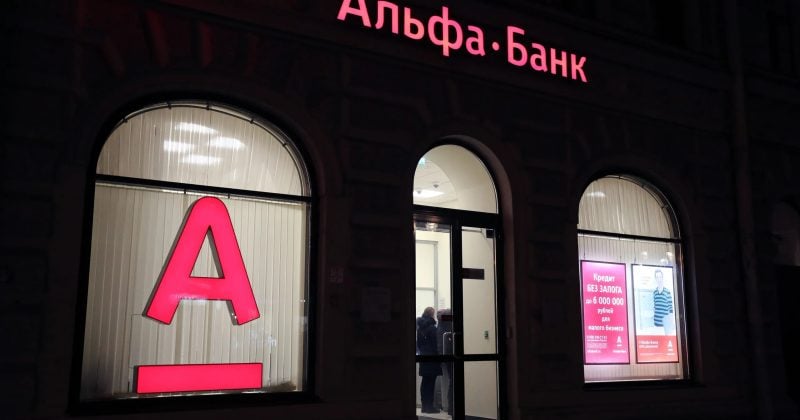
Russia's Alfa-Bank Pilots Cryptocurrency Trading Services... Accelerating Market Entry Following July Regulatory Legalization
Alfa-Bank, Russia's largest private financial institution, officially began testing cryptocurrency trading services on July 9, 2026. This move follows the new federal regulatory framework that took effect on July 1, signaling the full-scale institutionalization of digital assets in the Russian financial sector.
On July 9, 2026, Alfa-Bank, Russia's largest private financial institution, launched a pilot operation of cryptocurrency trading services for qualified investors. This test comes immediately after the Russian government implemented a new federal regulation legalizing the cryptocurrency market as of July 1, 2026. Through this service, Alfa-Bank aims to establish an environment where customers can safely trade and store digital assets within the banking system.
Alfa-Bank has set a strategic goal to go beyond simple brokerage and become an authorized Digital Depository. Having already gained experience in the field of tokenization, such as issuing Digital Financial Assets (DFA) linked to gold, Alfa-Bank plans to strengthen its dominance in the digital asset ecosystem by integrating this cryptocurrency trading service.
As of July 1, 2026, the Russian State Duma and the Central Bank have clearly established the previously ambiguous legal framework for cryptocurrency. The new legislation allows major financial institutions to officially process cryptocurrency transactions as licensed brokers, which is expected to be recorded as a key milestone in the institutionalization of digital assets in Russia.
The Central Bank of Russia has been implementing a roadmap through July 2026 to enact clear laws for digital asset regulation, aiming to increase market transparency.
Following the implementation of the legislation, investors will participate in the market under strict classification as qualified or non-qualified investors. This reflects the Central Bank's strong commitment to preventing reckless speculation and protecting general retail investors who may lack financial knowledge.
Differential Market Access and Restrictions Based on Investor Classification
General individuals classified as non-qualified investors are limited to three types of investable assets: Bitcoin (BTC), Ethereum (ETH), and Tether (USDT). Additionally, their total annual investment limit is set at 300,000 rubles, and investments exceeding this amount are legally prohibited.
- Non-qualified investors: Only 3 types of assets (Bitcoin, Ethereum, USDT) can be traded
- Annual investment limit: A total of 300,000 rubles (approx. 4.5 million KRW) for non-qualified investors
- Qualified investors: Granted unrestricted trading rights for all approved digital assets
- Transaction safeguards: A 2-day transaction freeze applies to large or suspicious fund transfers
Alfa-Bank's move is a strategic step to gain an advantage in competition with state-owned Sberbank and technology-oriented financial firm T-Bank. As Sberbank is also rushing to build its own digital custody platform and integrate cryptocurrency into its banking app, the competition to dominate digital assets in the Russian financial sector is expected to intensify.
Alfa-Bank provides digital asset services through its own platform, 'A-Token,' and has maximized user convenience by linking it with its mobile application. It has adopted a structure where immediate transactions occur once an investor pre-deposits funds, combining the stability of the existing financial system with the efficiency of blockchain.
Technical measures for anti-money laundering and investor protection have also been strengthened. In particular, if large transfers to third parties or abnormal transaction patterns are detected, a 'cooling-off' system that suspends the transaction for two days is introduced to preemptively block the possibility of financial crimes.
The Central Bank of Russia plans to fully implement the cryptocurrency regulation law starting September 1, 2026, which will require all financial institutions to strictly comply with regulations. Alfa-Bank anticipates that market liquidity will be fully secured by the end of 2027 and plans to gradually expand its service scope until then.



This content is for information and commentary only and is not investment advice.
Join the reader conversation
Read reactions to this article and leave your own note.