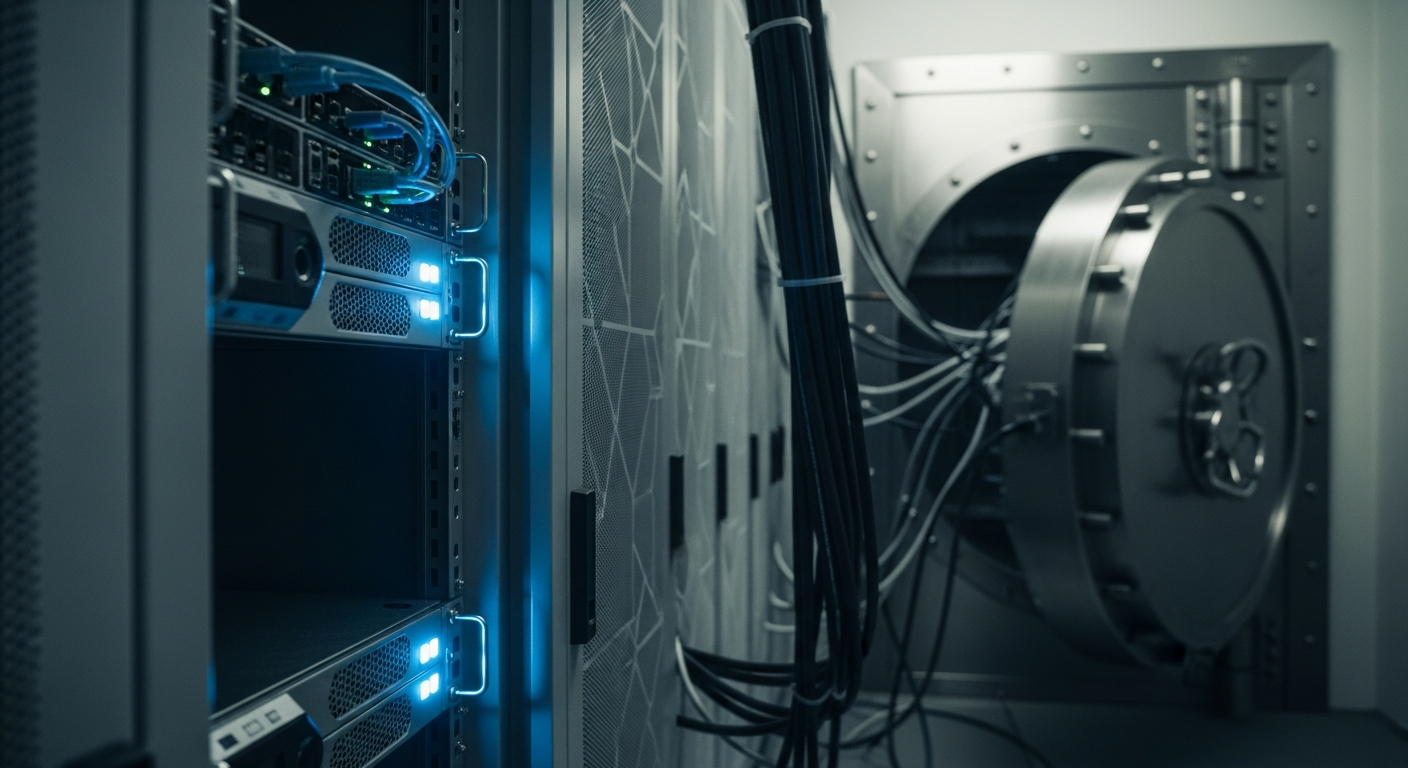
Bitcoin Quantum Computing Threat Materializes: BitGo's Institutional Response and Technical Debates for Solving the 'Quantum Dilemma'
BitGo has announced a new phase in Bitcoin security by launching quantum risk management tools for institutional investors. Technical choices between expanding block sizes and implementing STARK proofs to counter quantum computing threats are emerging as key industry topics.
On July 9, 2026, BitGo Holdings announced quantum risk management features for its Bitcoin custody platform. This suggests that the digital asset industry is beginning to treat quantum computing not as a theoretical future threat, but as a practical risk requiring immediate institutional control.
The greater risk associated with quantum computing arises from the failure to implement new protective technologies in a timely manner, rather than from the technology itself.
BitGo (NYSE: BTGO), a company listed on the New York Stock Exchange, introduced four core features to help institutional investors identify and reduce potential quantum exposure within their custody wallets. These tools cover UTXO-based wallets and multi-signature setups, providing a framework for practically measuring quantum risk.
Vulnerability Map: Risks of P2PK and Taproot
Bitcoin's quantum vulnerability varies depending on the script type. In particular, P2PK scripts have permanently exposed public keys, putting approximately 1.7 million BTC at risk. Taproot (P2TR) is evaluated as a step backward in terms of quantum security compared to SegWit because its locking script includes the public key.
- P2PK: High risk as the public key is permanently exposed in the script.
- P2TR (Taproot): Increased risk compared to SegWit due to the presence of the public key in the locking script.
- P2PKH (Reused Keys): Belongs to the risk group as the public key is exposed during transaction transmission.
Bitcoin's post-quantum migration faces the so-called 'quantum dilemma.' Post-quantum signatures have very large data sizes, raising concerns about slowing down network speeds. To address this, two opposing solutions are being debated: expanding the block size or using STARK proofs to compress signatures.
According to a February 2026 report by Galaxy Research, Bitcoin developers are already making significant progress on quantum readiness. Discussions regarding the introduction of quantum-resistant signature algorithms are actively taking place through platforms like Bitcoin Optech, demonstrating that technical preparation is by no means lagging.
Advancements in such security technologies are crucial for large institutional holders like MicroStrategy. With the current Bitcoin price trading around $64,000, MicroStrategy's position is recording an unrealized loss of approximately $9.7 billion, and Chairman Michael Saylor recently drew market attention by posting an ambiguous message about an 'orange dot.'
Standard Chartered pointed out that MicroStrategy's communication style could confuse the Bitcoin market in the short term. However, the strengthening of institutional infrastructure, such as BitGo's launch of quantum protection tools, is expected to serve as an essential factor in restoring long-term investment confidence.
Future Key Points for Post-Quantum Migration
- The timing of the integration of NIST (National Institute of Standards and Technology) post-quantum cryptographic standards into blockchain protocols.
- The progress of technical proposals related to quantum readiness discussed in Bitcoin Optech.
- Review of the feasibility of applying signature aggregation technology using STARK proofs to the actual network.
- The adoption rate of quantum risk management tools by institutional investors and trends in asset movement.
The Bitcoin ecosystem faces the massive challenge of quantum computing, but as seen in BitGo's case, institutional responses have already begun. The process of finding a balance between the technical challenge of signature size and blockchain efficiency will determine Bitcoin's future status as a store of value.

This content is for information and commentary only and is not investment advice.
Join the reader conversation
Read reactions to this article and leave your own note.