Evolution of Virtual Asset Exchanges: Transitioning Beyond Simple Trading to Next-Generation Financial Operating Systems
As of July 15, 2026, virtual asset exchanges are evolving beyond simple brokerage platforms into 'super apps' that integrate traditional finance and social features. This analysis covers structural market changes, including Japan's legal status reclassification and Binance's TradFi expansion.
On July 15, 2026, the boundaries between virtual asset exchanges and global banks have virtually disappeared. As Japan reclassified digital assets as formal financial products and Binance recorded an explosive 15x growth in traditional finance (TradFi) perpetual futures trading, the industry has moved beyond the era of simple transactions. Today's leading platforms are no longer places for speculation but are establishing themselves as core operating systems for next-generation global wealth.
Virtual asset exchanges are now transforming beyond simple trading venues into 'super apps' where all of a user's financial life takes place, and the center of neo-finance.
With the maturation of the virtual asset market, basic elements of execution such as execution price, liquidity depth, latency, and fees are becoming standardized. While these factors remain important, in the large-scale competitive landscape of 2026, they have become commodities that no longer provide a differentiated competitive advantage. Consequently, platforms are faced with the challenge of providing a holistic environment that encompasses the user's entire financial life, going beyond simple liquidity provision.
The Case of Binance: Transitioning to a Financial Super App
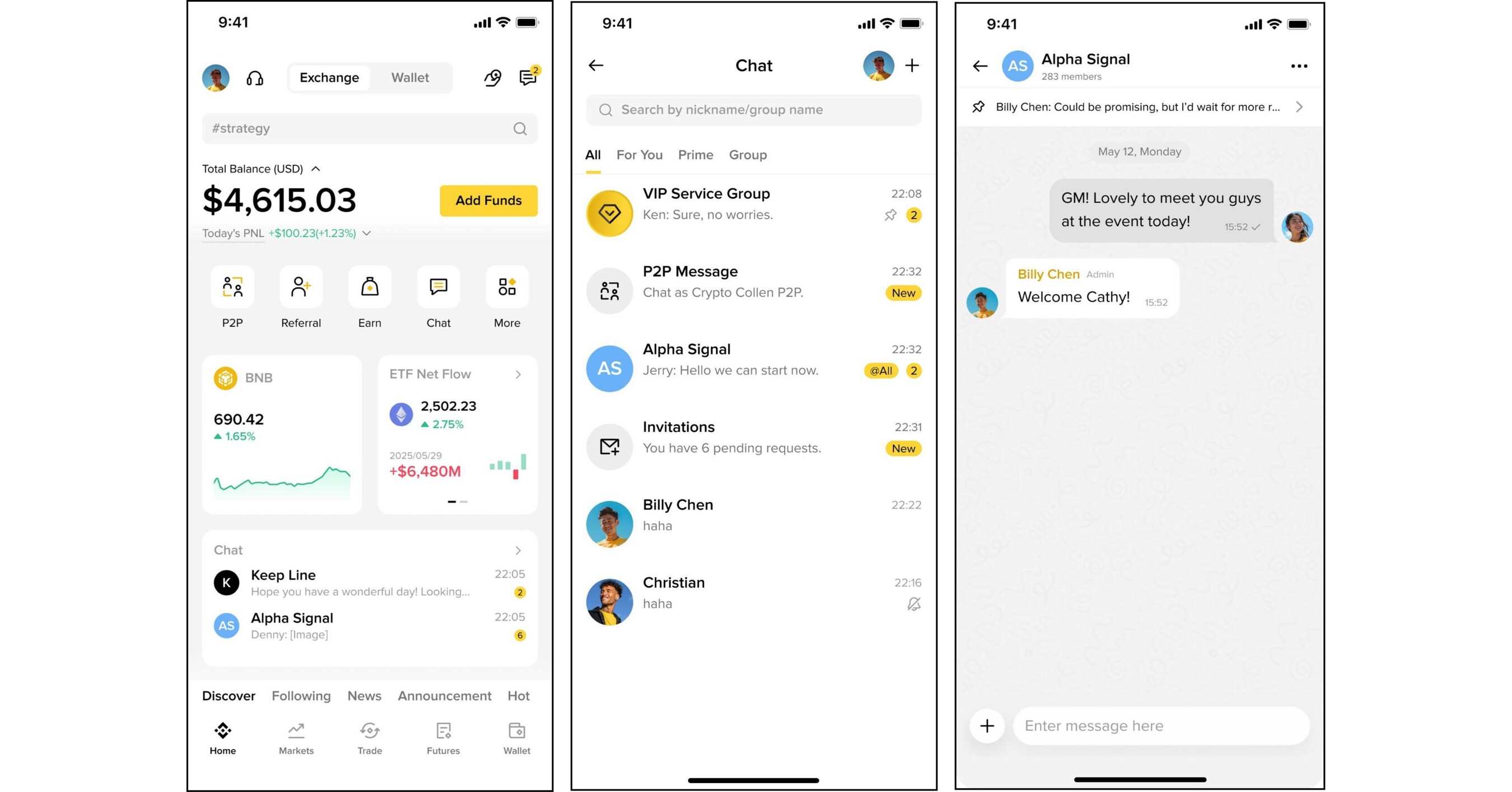
Binance launched 'Binance Chat' on April 15, 2026, accelerating the integration of social and finance. This feature bundles messaging, community interaction, and virtual asset transfers into a single experience, allowing users to manage assets without leaving the app. This integration strategy is becoming a key driver for increasing user retention time and strengthening dominance over the financial ecosystem.
- Binance: Processes over $11 billion in daily trading volume, holding approximately 37% market share, and is building an overwhelming liquidity and super app ecosystem.
- Coinbase: While trading volume is relatively low, it is strengthening its role as a link to institutional finance based on regulatory compliance and trust.
- OKX: Focuses on technical utility and user convenience through integrated Web3 wallets and advanced trading bots.
- Kraken: Solidifying its position in niche markets based on a long record of transparency and public trust.
Binance's TradFi perpetual futures contracts have shown remarkable growth since their launch in January 2026. Weekly trading volume surged about 15 times from approximately $563 million to $8.5 billion recently, covering more than 20 underlying assets. This suggests that virtual asset exchanges are rapidly absorbing the domains of traditional stock and derivative markets.
On July 15, 2026, the Japanese government passed a bill reclassifying virtual assets as formal financial assets rather than simple payment methods. This amendment introduced insider trading regulations and strict penalty provisions for virtual assets, increasing institutional stability. These changes are expected to pave the way for future tax cuts related to virtual assets and serve as a decisive opportunity to lower entry barriers for institutional investors.
Risks and Challenges of Centralized Financial Hubs
However, the rise of these integrated systems also brings risks. In a fraud status report released on July 15, 2026, the UK government warned of a potential surge in virtual asset laundering and AI-based fraud cases. The report pointed out that law enforcement agencies are underprepared to respond to these new forms of crime, suggesting that centralized financial hubs could become targets for crime.
Furthermore, as seen in the case of volatility from stablecoin issuer Circle, asset instability within an integrated system can transmit systemic risk to the entire ecosystem. In the process of evolving into a financial operating system, ensuring platform stability and transparency is an essential prerequisite for maintaining user trust.
In conclusion, the virtual asset industry has entered a new phase called 'Neo-Finance'. The absorption of traditional banking, social interaction, and decentralized protocols into a single seamless user experience is an inevitable trend. As platforms move beyond simple exchanges to become operating systems for global wealth, the future of finance will move in a more integrated and digitized direction.
| Exchange | Market Share | Daily Turnover | Core Strength |
|---|---|---|---|
| Binance | ~37% | $11B+ | Liquidity & Super App Ecosystem |
| Coinbase | Lower | Varies | Regulatory Trust & Compliance |
| OKX | Significant | Varies | Web3 Wallet & Trading Bots |
| Kraken | Niche | Varies | Transparency & Public Record |
A comparison of market share, daily volume, and core value propositions for leading exchanges in early 2026.


This content is for information and commentary only and is not investment advice.
Join the reader conversation
Read reactions to this article and leave your own note.