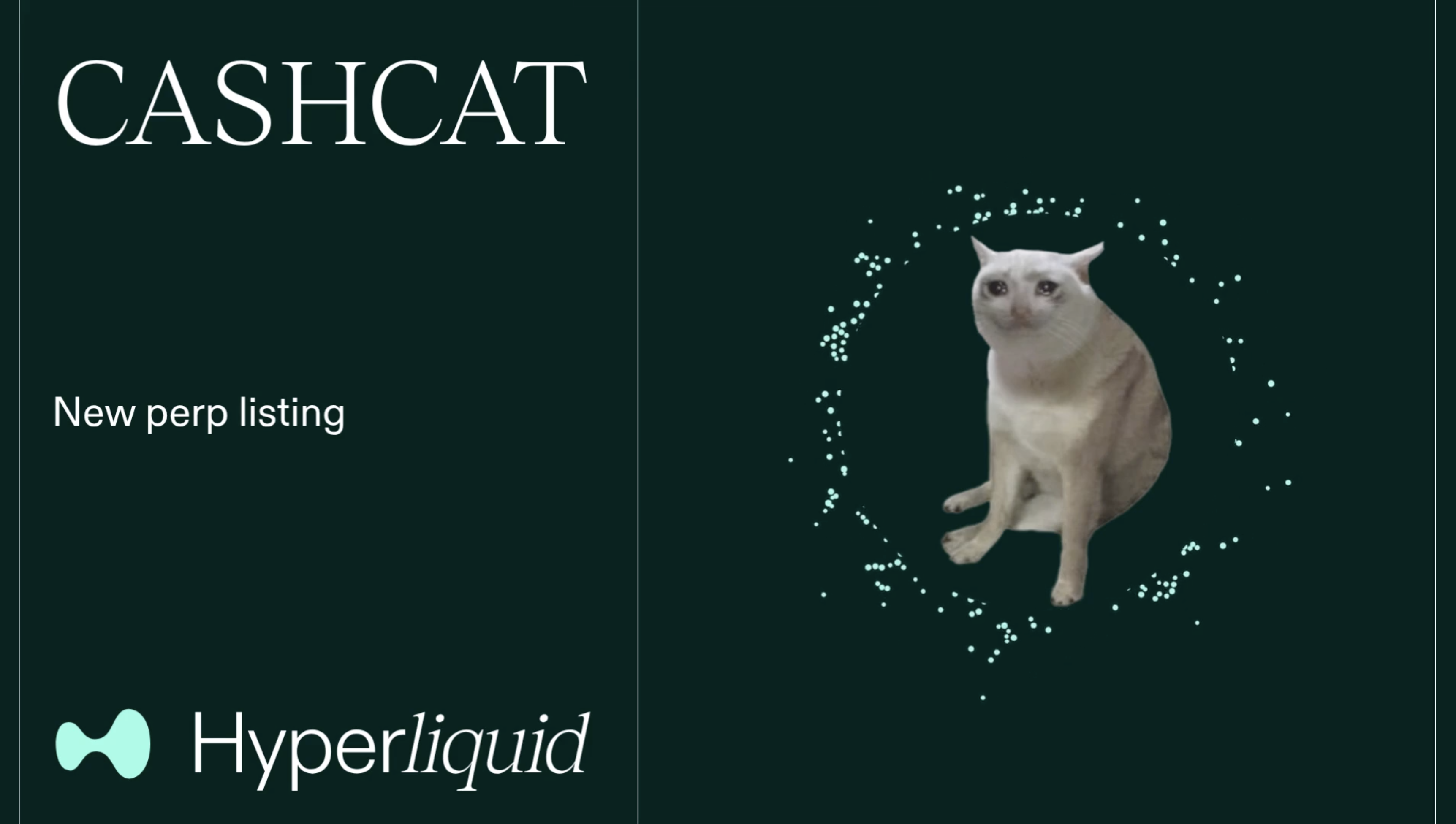
Robinhood Chain Sees Memecoin Craze One Week After Launch... Market Cap Surpasses $150 Million
On July 11, 2026, memecoin trading on the Robinhood Chain surged, with major tokens like CASHCAT reaching a market capitalization of $150 million. This suggests the potential of a new retail finance model combined with AI agent technology.
On July 11, 2026, 'Robinhood Chain,' an Ethereum Layer 2 (L2) network launched by Robinhood, is demonstrating a strong influx of retail capital just one week into its operation. Built on Arbitrum Orbit technology, the network was originally designed with real-world asset (RWA) tokenization in mind, but memecoin trading utilizing the permissionless environment is currently dominating the ecosystem.
Robinhood Chain is establishing itself as more than just a trading platform, but as a new financial laboratory where retail capital and on-chain technology converge.
In particular, early memecoins such as 'CASHCAT' recorded price increases of over 1,500% immediately after launch, growing to a market capitalization of $150 million. This is analyzed as a result of Robinhood Chain's EVM compatibility and low transaction costs combining with the speculative demand of Robinhood's 24 million users.
Expansion of AI Trading Agents and the Retail Ecosystem
Robinhood is strengthening its AI trading agent features to enhance trading efficiency for retail investors. Since the beta service began for stock and options traders in late May 2026, approximately 70,000 agent accounts have been created. Robinhood stated that these AI agent features will soon be expanded to cryptocurrency traders, supporting complex on-chain data analysis and strategy execution.
- March 13, 2026: Listing of major memecoins such as PNUT and POPCAT on the Robinhood main app
- Late May 2026: Launch of AI trading agent beta service for stocks and options
- Early July 2026: Official launch of the Arbitrum Orbit-based Robinhood Chain
- July 11, 2026: Market capitalization of major on-chain memecoins like CASHCAT surpasses $150 million
These changes are an extension of Robinhood's retail-friendly moves, such as its past listing of popular memecoins like dogwifhat (WIF). Robinhood is now seeking a transition beyond simple brokerage services into a decentralized ecosystem where users directly provide on-chain liquidity and trade, which is evaluated as a significant case of a traditional financial platform evolving into an on-chain environment.
Meanwhile, changes in the regulatory environment are also a noteworthy variable. On July 11, 2026, the '21st Century ROAD to Housing Act,' which includes a provision prohibiting the U.S. Federal Reserve from issuing a Central Bank Digital Currency (CBDC), became law without the President's signature. Amidst these changes in the regulatory framework, how Robinhood balances the volatility of the on-chain ecosystem with investor protection is expected to be key to its future growth.



This content is for information and commentary only and is not investment advice.
Join the reader conversation
Read reactions to this article and leave your own note.