The Clash Between AI Infrastructure Investment Craze and Inflation: The Fed's Deliberation and Macroeconomic Direction in July 2026
Ahead of the July 2026 Federal Open Market Committee (FOMC) meeting, the rapid growth of the artificial intelligence (AI) industry has emerged as a new inflationary variable. As surging demand for hardware and power intensifies price pressures, the Fed has entered a cautious 'wait-and-see' mode, balancing the long-term promise of productivity gains against immediate cost increases.
As the U.S. Federal Reserve (Fed) prepares for its July 2026 policy meeting, the AI boom has rapidly emerged as a key new variable in the inflation debate. While AI was previously considered a factor that could stabilize prices through long-term productivity improvements, the massive capital investment and vast power consumption required for AI infrastructure are now being identified as factors sustaining upward price pressure. Consequently, the central bank has encountered an unexpected "wildcard" while weighing the timing of interest rate cuts.
Continued strong demand for AI infrastructure is likely to maintain upward pressure on technology products and power prices.
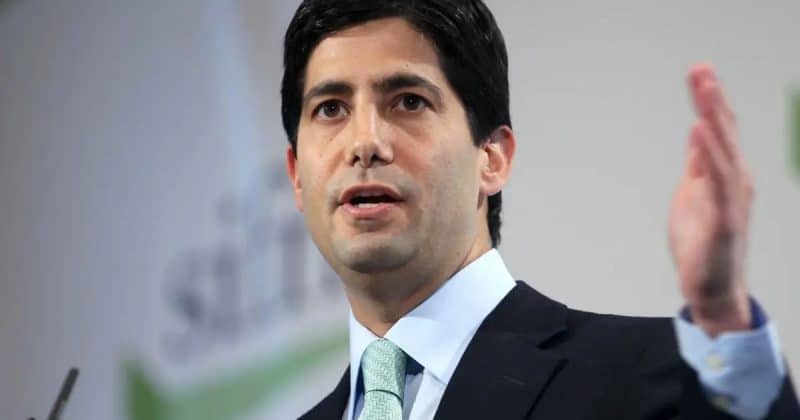
Fed Chair Kevin Warsh expressed significant uncertainty regarding AI's impact on inflation in recent remarks. He suggested that the Fed is closely monitoring AI's economic ripple effects, implying that the central bank will maintain a cautious stance for the time being. Current market pricing also shows a decreased likelihood of interest rate changes following the July 2026 meeting, supporting the cautious "wait-and-see" approach adopted by policymakers.
Drivers of Inflation: Hardware and Power
The relentless demand for AI infrastructure is driving price increases across technology hardware and energy markets. Fed policymakers analyze that this demand is not a temporary phenomenon but will likely sustain upward pressure on tech products and power costs for a long period. In particular, as competition for resources needed to build and operate data centers intensifies, inflation indicators in related sectors remain at high levels.
- Rising costs of construction materials and specialized labor due to data center expansion
- Surge in power consumption for AI model training and inference, leading to energy rate hikes
- Continued tight supply-demand imbalance in the supply chain for high-performance GPUs and related semiconductors
Within the Federal Reserve, a fierce debate is unfolding over the timing and intensity of productivity gains brought by AI. While some members expect technological advancements to ultimately increase production efficiency and exert downward pressure on overall prices, others warn that it will take a significant amount of time for such effects to manifest. This "productivity paradox" is becoming the biggest obstacle in setting the direction of interest rate policy in the current high-inflation environment.
Alberto Musalem, President of the Federal Reserve Bank of St. Louis, pointed out that it is risky to rely solely on future productivity gains when inflation significantly exceeds the 2% target. He took a firm stance, emphasizing that real policy rates are below long-term neutral levels amid a stable labor market and rising inflation expectations, and suggested that the possibility of further rate hikes should remain open if necessary.
Economic Indicators in Mid-2026: CPI and the Labor Market
According to data released by the U.S. Bureau of Labor Statistics (BLS), the Consumer Price Index (CPI-W) in May 2026 rose 4.4% year-over-year, remaining at a high level. In particular, the price index for that month rose 0.7% month-over-month on a non-seasonally adjusted basis, suggesting that inflationary pressures remain strong. This data serves as objective grounds making it difficult for the Fed to rush into interest rate cuts.
The labor market also maintains a solid trend, deepening the Fed's concerns. The unemployment rate in June 2026 was 4.2%, and non-farm payrolls showed stability with an increase of 57,000. A stable labor market supports purchasing power and can be a factor in entrenching inflation, which, combined with cost-push pressures from the AI boom, creates complex macroeconomic challenges.
The current AI investment craze is often compared to the dot-com bubble of the late 1990s. While the trend is similar to how internet infrastructure construction changed the overall economic landscape back then, experts analyze that there is a difference in the profitability shown by current companies. In particular, leading companies like NVIDIA are evaluated as proving their market value through actual financial performance beyond mere expectations.
In fact, NVIDIA recorded $215.9 billion in revenue for fiscal year 2026, showing a phenomenal gross margin of 71%. The scale of these companies, with market capitalizations approaching $4.3 trillion as of February 2026, clearly demonstrates the massive volume of capital flowing into the AI sector. The Fed is closely monitoring the impact of these massive capital flows on asset prices and real economy prices.
In conclusion, investors' focus is now shifting beyond the simple direction of interest rates to the intersection of interest rates and AI. Major investment banks, including Morgan Stanley, believe that the Federal Reserve's future path depends on how quickly AI's productivity gains can offset the immediate inflationary costs associated with infrastructure development. As we enter the second half of 2026, AI is expected to act as both an engine for economic growth and a variable for price stability, further complicating the Fed's policy equation.
| Indicator | Period | Value |
|---|---|---|
| CPI-W (Year-over-Year) | May 2026 | 4.4% |
| Unemployment Rate | June 2026 | 4.2% |
| Payroll Employment Change | June 2026 | +57,000 |
| CPI-W (Monthly Change) | May 2026 | 0.7% |
Key inflation and labor data influencing Federal Reserve policy as of July 2026.

This content is for information and commentary only and is not investment advice.
Join the reader conversation
Read reactions to this article and leave your own note.