Q2 2026 Stablecoin Market Analysis: On-chain Payments Become Cheaper Than Interbank Rates Amid Infrastructure-Led Restructuring
In Q2 2026, stablecoin-based foreign exchange remittance costs were priced 3.2bp lower than interbank benchmarks, securing a structural advantage. While the total market capitalization decreased by $4.2 billion, the growth of Tron and BNB Chain, along with institutional entry, suggests that stablecoin payment utility has reached full momentum.
The digital asset market in Q2 2026 set a historical milestone where the practical utility of stablecoins surpassed the efficiency of traditional finance. While on-chain assets previously remained auxiliary tools for the mainstream financial system due to high volatility and transaction costs, they have now begun to gain a clear advantage in terms of cost. This shift is expected to fundamentally change the landscape of the global remittance and payment market.
The latest benchmark report released by Borderless.xyz proves this change with figures. According to the report, during the period from April to June 2026, FX transaction costs using stablecoins were formed lower than the interbank market's reference price for the first time in history. This suggests that the cost savings promised by blockchain technology have moved beyond the theoretical stage to secure practical economic viability.
In the past, stablecoin users had to accept higher exchange spreads than traditional finance in exchange for fast transfer speeds. However, due to the optimization of liquidity provision and the maturity of Automated Market Makers (AMMs), this 'crypto premium' has completely disappeared. On-chain liquidity has now become the source of the most competitive exchange rates across more than 260 currency corridors worldwide.
However, apart from these technological advances, the overall asset size of the stablecoin market showed a slight decrease in Q2. This is because investors are relocating capital away from yield-centric strategies toward practical payments and infrastructure stability. This is interpreted as a structural reorganization occurring as the nature of the market evolves from speculative assets to financial infrastructure.
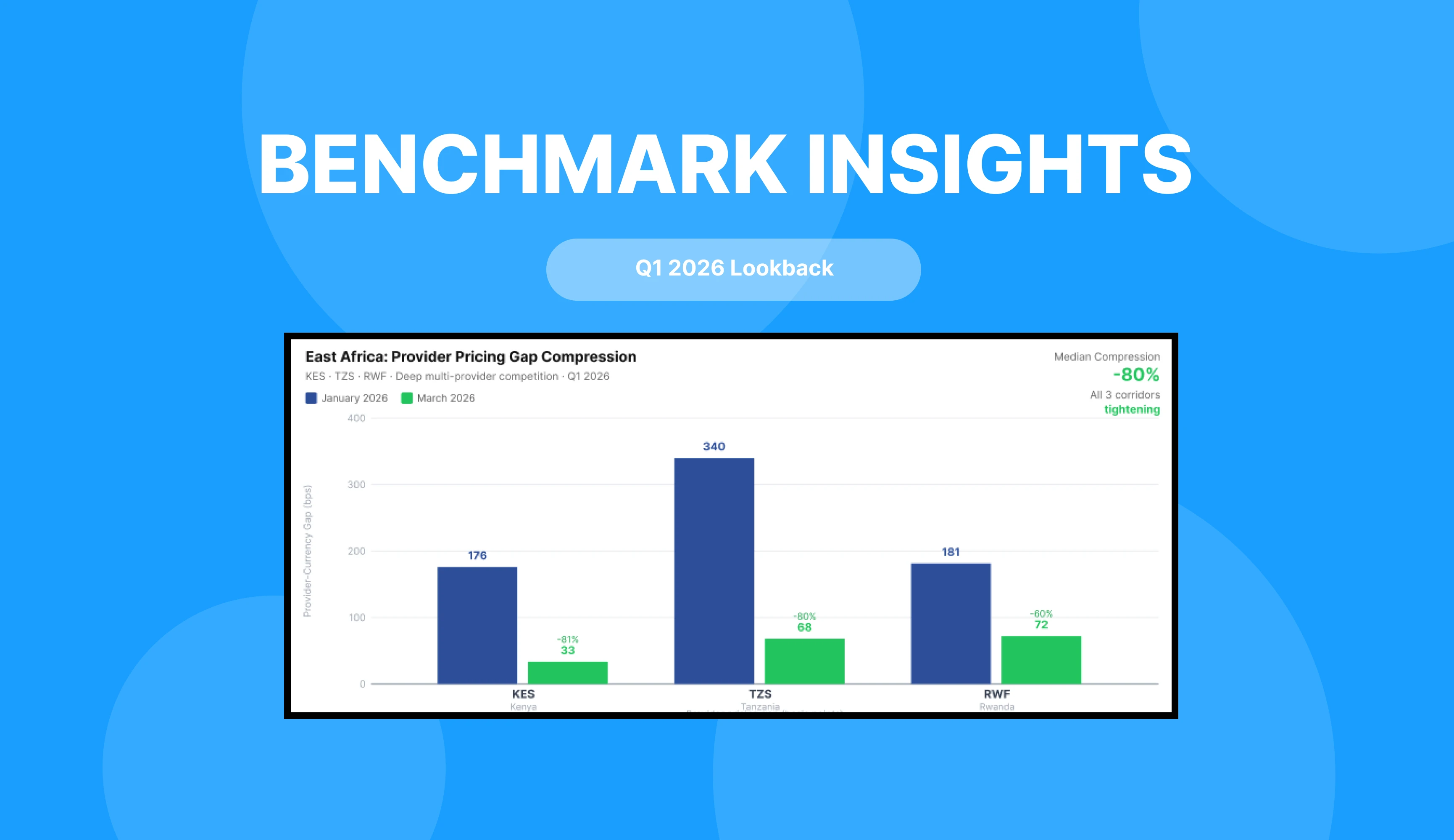
Looking at specific figures, stablecoin payment costs were priced an average of 3.2bp lower than interbank exchange rates. This phenomenon was more pronounced in regions with previously underdeveloped financial infrastructure, such as Latin America and East Africa, and is gradually spreading to major developed country currency corridors. This shows that stablecoins are solidifying their status as a global payment layer beyond a simple store of value.
The fact that foreign exchange spreads have fallen below interbank benchmarks is a victory for on-chain finance. The core challenge for the market has now shifted from reducing exchange costs to a matter of routing—how much faster and more securely funds can be delivered to their destination.
Despite the increase in efficiency, the total stablecoin market capitalization decreased by approximately $4.2 billion in the second quarter. Circle's USDC was hit hardest, recording outflows of $3.4 billion, and Ethena's USDe also shrank by $1.4 billion due to spreading risk-aversion sentiment. Conversely, Tether, which serves as the market's reserve currency, added $1.8 billion to its supply, proving robust demand even in a down market.
Supply Changes by Network and the Rise of Payment-Centric Chains
From a network perspective, there was a clear pattern of Ethereum's dominance weakening while the influence of Tron and BNB Chain expanded. The Ethereum base layer saw more than $10 billion in stablecoin supply exit in the second quarter alone, marking its worst performance since early 2023. In contrast, Tron, which has active payment activity, saw an increase of $3.4 billion, and BNB Chain saw an increase of $700 million, showing a stark contrast.
- HSBC obtained a license from the Hong Kong Monetary Authority and confirmed the launch of a Hong Kong Dollar-based stablecoin within the second half of 2026.
- Japan's three megabanks—MUFG, SMBC, and Mizuho—signed an MOU to build a joint Yen stablecoin infrastructure with a target launch of March 2027.
- The Bank of Thailand has begun to detect abnormal fund flows using stablecoins and utilize them as a key indicator for cracking down on the gray economy.
Market leader Tether is evolving beyond a simple issuer into a massive financial institution. Tether currently holds approximately $141 billion in direct and indirect exposure to US Treasuries and recorded a net profit of $1.04 billion in the first quarter of 2026 alone. Additionally, Tether announced a strategy to enter the lending business using its $20 billion worth of gold deposits, moving to diversify its revenue structure.
In the first half of 2026, the venture capital market was led by Coinbase Ventures, with most investment funds concentrated on building infrastructure and payment networks. In particular, Ripple's RLUSD reaching a record high market capitalization of $1.7 billion reflects high market expectations for regulated stablecoins. The market is now focusing on how efficiently existing assets can be moved rather than the birth of new tokens.
| Network | Supply Change (USD) |
|---|---|
| Ethereum | -$10.0 Billion |
| Tron | +$3.4 Billion |
| BNB Chain | +$0.7 Billion |
Ethereum saw the largest contraction while payment-focused chains like Tron and BNB experienced growth.



This content is for information and commentary only and is not investment advice.
Join the reader conversation
Read reactions to this article and leave your own note.