
[Analysis] Zhongnanhai in the Mist: Xi Jinping's Succession Structure and Power Realignment through 2026 Prediction Markets
Following the conclusion of the Two Sessions in March 2026, the clock of Chinese politics is moving rapidly toward the 21st Party Congress in 2027. Prediction markets identify Ding Xuexiang, Chen Jining, and Li Qiang as leading candidates, reflecting the uncertainty of power succession.
With the conclusion of the National People's Congress and the Chinese People's Political Consultative Conference (Two Sessions) in March 2026, political attention in Beijing is now shifting toward the 21st National Congress of the Communist Party (Party Congress) scheduled for the second half of 2027. This spring, the launch of the 'Cadre Evaluation Leading Group' led directly by President Xi Jinping signals the beginning of a full-scale personnel reshuffle. In current prediction markets, three figures—Ding Xuexiang, Chen Jining, and Li Qiang—are emerging as key members of the next leadership, engaged in a fierce competition.
Following the closing of the Two Sessions in mid-March 2026, China's political clock has transitioned to a system for preparing for the Party Congress that occurs every five years. President Xi Jinping is expected to head the Cadre Evaluation Leading Group to be formed this spring, leading the personnel vetting for the formation of the next leadership. This is a key institutional procedure for reorganizing the power structure within the party ahead of the large-scale leadership reshuffle expected at the 2027 Party Congress.
With the formation of the Cadre Evaluation Leading Group after the Two Sessions in the spring of 2026, China's political clock has begun ticking toward the Party Congress that occurs every five years.
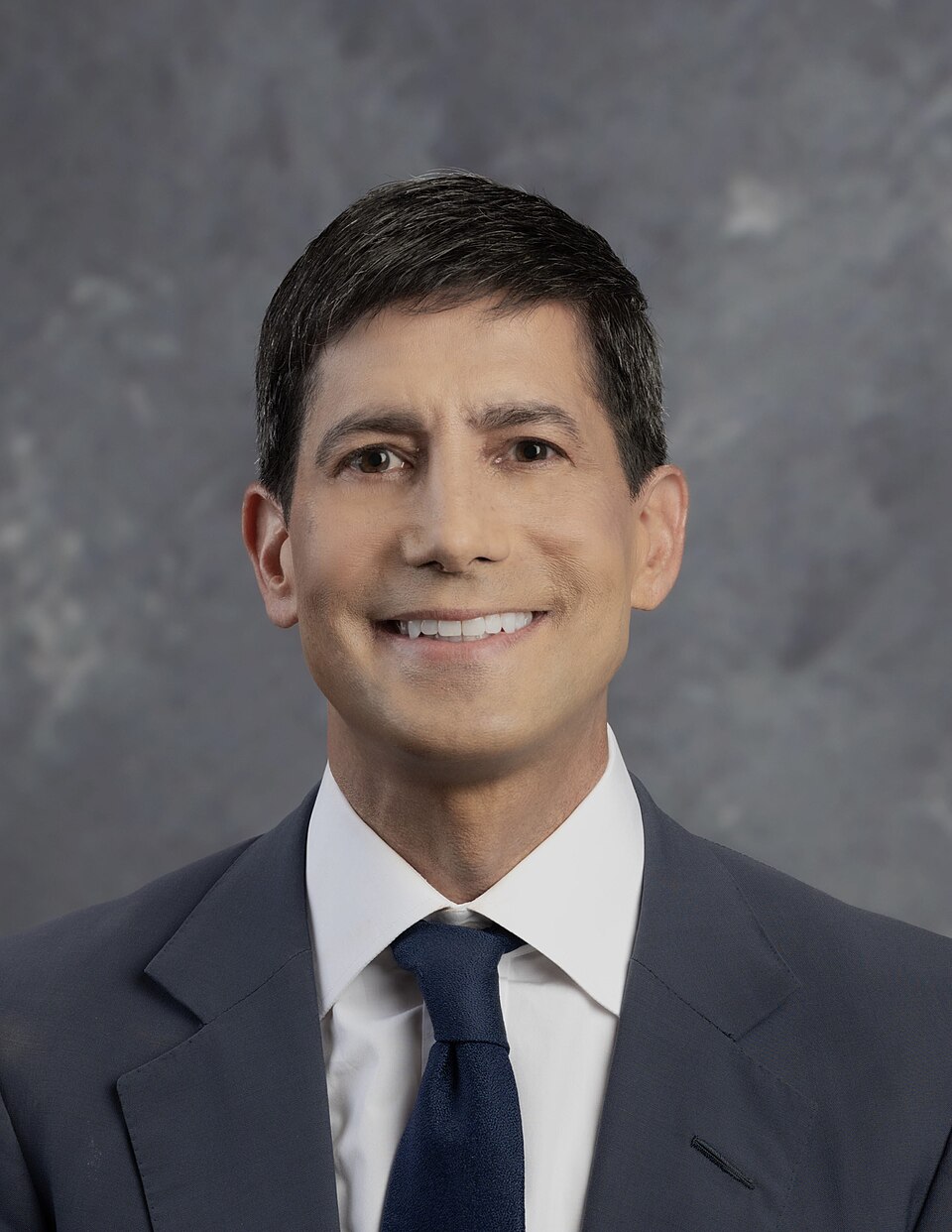
According to prediction market data as of April 9, 2026, Standing Committee member Ding Xuexiang is leading with a 22.0% probability, closely followed by Chen Jining (18.0%) and Li Qiang (17.0%). These figures, showing no single candidate with overwhelming support, suggest that the succession structure within the current Chinese leadership remains fluid and that no one has yet solidified a firm 'crown prince' status. Market participants are closely watching each candidate's administrative performance and political ties with President Xi.
Political Status and Roles of Key Candidates
- Ding Xuexiang: Ranked 6th on the Politburo Standing Committee and serving as the Executive Vice Premier of the State Council, he oversees key economic portfolios such as development, reform, finance, and taxation.
- Chen Jining: As a Politburo member, he is expanding his influence within the party based on his technocratic background and is considered a strong next-generation leader.
- Li Qiang: As the current Premier of the State Council, he is leading the drafting of the outline for the 15th Five-Year Plan (2026-2030), testing his administrative capabilities.
Ding Xuexiang reaffirmed his political status by remaining at President Xi Jinping's side during the Two Sessions in March 2026. Instead of typical local administrative experience, he has built a unique career as a central party official and currently handles pivotal national economic tasks, succeeding the role of former Vice Premier Han Zheng. This institutional position and President Xi's deep trust are major factors placing him in the most advantageous position in the succession race.
Age Limits and Systemic Uncertainty
As of March 2026, potential successors born in the 1970s are analyzed to still be in the 'preliminary' stage. While a massive personnel reshuffle is expected at the 2027 Party Congress due to factors such as age limits and anti-corruption purges, the situation where no clear successor is designated under President Xi Jinping's long-term rule continues. This results in inducing competition among party elites while simultaneously increasing the uncertainty of power succession.
Historically, cases where successors designated by Mao Zedong or Deng Xiaoping were purged or ousted clearly illustrate the current 'dictator's dilemma.' The absence of a clear successor contributes to consolidating the incumbent's power and strengthening internal unity in the short term, but in the long term, it undermines systemic stability and amplifies concerns over a power vacuum. The Politburo Standing Committee meetings and plenaries scheduled for early summer 2026 are expected to be a major turning point as the candidate pool narrows with the formalization of cadre evaluation results.
Premier Li Qiang is tasked with the heavy responsibility of designing China's future economic strategy by leading the establishment of the 15th Five-Year Plan. This demonstrates that he maintains President Xi Jinping's trust in the policy-making process beyond being a mere administrative head. However, his economic performance and crisis management skills during his premiership will be key variables determining his future political life and succession probability.
Chen Jining, a former technocrat who served as the Mayor of Beijing and President of Tsinghua University, is rapidly rising in alignment with China's current national policy focus on science and technology innovation. He is relatively young within the Politburo and is solidifying his position based on expertise gained in complex urban administration and environmental policy. The rise of technocrats is also evaluated as a leadership model suitable for the era of technological hegemony competition that China faces.
Key Points to Watch in the Summer of 2026
The high-level meetings between June and July 2026 will be a decisive period for shaping the personnel outline of the next Party Congress. During this time, the movements of Politburo members and the reporting stance of state media are likely to cause significant fluctuations in prediction market probabilities. Experts are particularly watching for the point when the results of the Cadre Evaluation Leading Group's activities are shared internally, which will serve as the first blueprint for China's power map in 2027.
Comparison of market-implied probabilities for the top three potential successors.

This content is for information and commentary only and is not investment advice.
Join the reader conversation
Read reactions to this article and leave your own note.