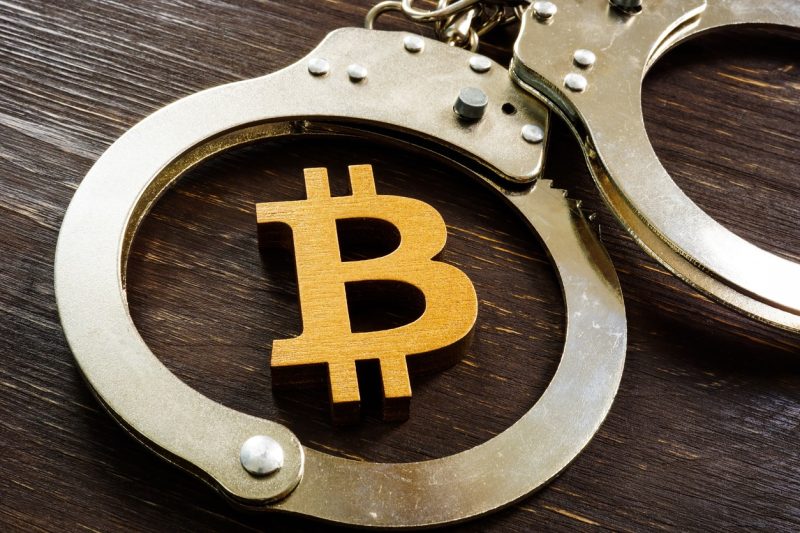
US Court Sentences Money Launderer Involved in $263 Million Crypto Theft to 70 Months in Prison
On April 27, 2026, a US court sentenced a California man to 70 months in prison for laundering money in a $263 million cryptocurrency theft case. The ruling demonstrates the US Department of Justice's strong commitment to tackling organized crime involving social engineering and SIM-swapping.
On April 27, 2026, Tangeman, a man from California, was sentenced to 70 months in federal prison for his role as a money launderer in a criminal organization that stole approximately $263 million in cryptocurrency. This ruling is expected to be recorded as a case of the US Department of Justice's strong response to large-scale cybercrime involving social engineering and SIM-swapping techniques targeting high-net-worth individuals.
The defendant's actions went beyond simple money laundering, and his attempt to destroy evidence after his associates were arrested is clear evidence of guilt.
Tangeman admitted to laundering at least $3.5 million for the criminal organization, and US District Judge Colleen Kollar-Kotelly ordered the prison sentence along with three years of supervised release after his discharge. He is the ninth defendant to plead guilty in this investigation, and it was revealed that he played a key role in making it difficult to track the stolen assets within the organization.
A $263 Million Organized Digital Robbery
According to the investigation results, the criminal organization began its activities as early as October 2023 and systematically attacked cryptocurrency holders until May 2025. They went beyond simple online phishing and used highly sophisticated techniques such as SIM-swapping to seize victims' communication privileges, committing 'organized digital robberies' and stealing a massive amount of cryptocurrency.
- Noah Urban: Already sentenced to 10 years in federal prison for his involvement in the crime.
- Buchanan: Identified as the main culprit in this case, with a trial scheduled for August 21, 2026. He faces up to 22 years if convicted.
- Tangeman: Sentenced to 70 months in prison this time for money laundering and attempting to destroy evidence.
Prosecutors emphasized that after hearing news of the arrests of organization members, Tangeman destroyed devices and attempted to eliminate evidence to erase traces of his crimes. The court determined that these actions were decisive evidence of a 'consciousness of guilt,' showing an intentional attempt to obstruct the investigation while recognizing the seriousness of the crime.
This sentencing coincides with the new enforcement strategy of the US Department of Justice and the FBI announced at the Bitcoin 2026 conference on April 27, 2026. Acting Attorney General Todd Blanche and FBI Director Kash Patel of the Trump administration declared a policy to focus investigative power on actual cryptocurrency criminals rather than technology developers, and the Tangeman case is an extension of this stance.
Cryptocurrency market experts expect that such strong judicial measures by the authorities will bring changes to the regulatory compliance environment for exchanges. Analysis suggests that as monitoring of platforms that neglect Anti-Money Laundering (AML) obligations intensifies, the cost of building and operating security systems for exchanges will rise significantly.
Future Judicial Procedures and Market Watchpoints
The trial of the main culprit, Buchanan, scheduled for August 2026, is expected to be an important milestone in reaching a final legal conclusion for this case. Furthermore, the FBI is still tracking the whereabouts of cryptocurrency funds linked to a high-net-worth individual who went missing in California, drawing attention to whether additional funds will be recovered and more associates will be apprehended.
The security industry evaluated that this case sends a significant warning message to individual investors. As classic social engineering techniques like SIM-swapping continue to cause astronomical damage, it is pointed out that investors must more thoroughly implement technical measures to protect their assets, such as using hardware wallets and strengthening multi-factor authentication.



This content is for information and commentary only and is not investment advice.
Join the reader conversation
Read reactions to this article and leave your own note.