DeFi's Identity Crisis: Asset Freeze Debate Triggered by Massive 2026 Hacks
Following a $290 million hack of KelpDAO in April 2026, the DeFi ecosystem is experiencing a severe philosophical and technical divide over whether to freeze stolen assets at the protocol level.
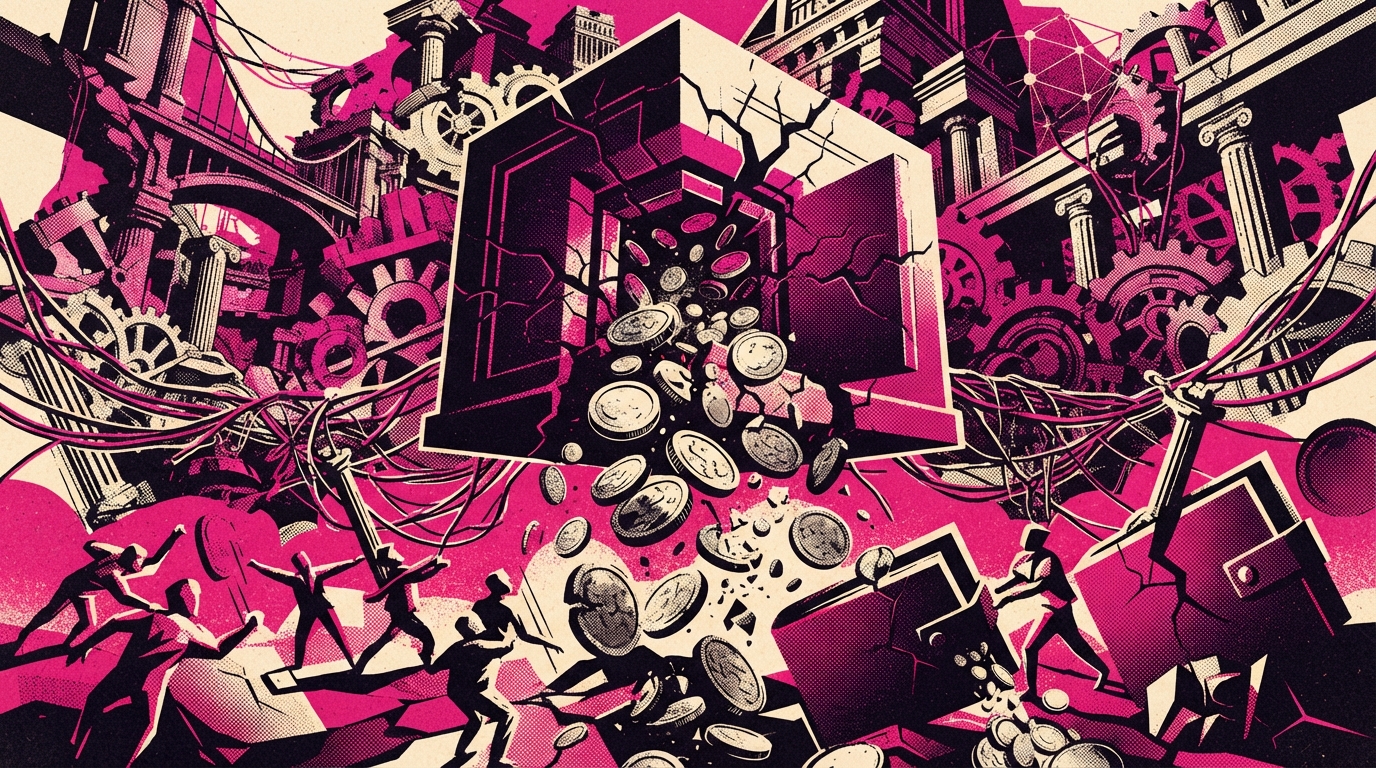
As of May 1, 2026, the decentralized finance (DeFi) ecosystem is facing a major identity crisis. The $290 million exploit of KelpDAO on April 18 was recorded as the largest security incident of the year, reigniting the debate over asset freezing within the industry. Currently, the industry is sharply divided between those calling for protocol-level intervention to recover stolen assets and purists who argue that freezing functions, such as 'god mode,' undermine the core values of decentralization.
At the heart of this controversy lies the security failure of KelpDAO, a liquid restaking protocol. The attacker, suspected to be North Korea's Lazarus Group, exploited a single-verifier configuration of the LayerZero bridge chosen by KelpDAO. The attacker used the stolen rsETH as collateral to borrow approximately $190 million in WETH from Aave, complicating the flow of funds and making immediate freezing or recovery difficult.
The KelpDAO incident went beyond a simple technical error, raising fundamental questions about the immutability of DeFi protocols. As the attacker utilized the liquidity of Aave, another major protocol, using stolen assets, the 'butterfly effect'—where an incident in one protocol spreads throughout the entire ecosystem—was demonstrated. Consequently, victims and some community members are strongly arguing that developers should have the authority to freeze assets in emergencies.
DeFi has the technical potential to freeze stolen funds, but not everyone agrees that it should be executed.
A series of security incidents since early 2026 have added fuel to this debate. On January 31, Step Finance lost $27.3 million due to a treasury key leak, and in the same month, Truebit ($26.4 million) and Resolv Labs ($23 million) also fell victim to smart contract and private key vulnerability attacks. With more than $310 million in assets leaked in April alone, including KelpDAO and Rhea Finance, there is a growing perception that the risk is too high to trust 'Code is Law' alone.
Centralized Intervention and the Tether Precedent
Tether, a centralized stablecoin issuer, is already serving as a practical regulator and enforcer in DeFi security incidents. During the $18.4 million oracle manipulation incident at Rhea Finance last April, Tether quickly froze about $3.29 million of the stolen funds, preventing further damage. Tether is in a unique position to intervene in asset flows based on its massive financial influence, having earned over $1 billion in profits in the first quarter of 2026 alone and holding $141 billion in U.S. Treasuries.
- January 31, 2026: Step Finance ($27.3M, Treasury key leak)
- January 2026: Truebit ($26.4M, Smart contract vulnerability)
- April 2026: Rhea Finance ($18.4M, Oracle manipulation and Tether's partial freeze)
- April 18, 2026: KelpDAO ($290M, Bridge exploit)
These moves by Tether pose a complex challenge for DeFi protocol developers. Those who adhere to the principle of 'Code is Law' warn that developer intervention will eventually become a starting point for censorship. On the other hand, there are realistic voices arguing that protocols that fail to protect the assets of general users cannot gain trust as a financial system. Developers are caught in a dilemma, forced to choose between community pressure for asset recovery and the philosophical value of decentralization.
Political pressure is also a major variable in the asset freeze debate. Recently, U.S. Senators Elizabeth Warren and Ron Wyden investigated the lending relationship between Commerce Secretary Howard Lutnick and Tether, questioning the transparency and control of stablecoin issuers. This political scrutiny is pressuring issuers to take stronger freezing measures against illegal fund flows within DeFi, which is ultimately resulting in compliance features being considered from the protocol design stage.
Technically, attempts to automate security and compliance monitoring are continuing. Aave v4, launched in early 2026, significantly strengthened security features, and tools like Elliptic's 'Holistic Screening' prevent money laundering by tracking cross-chain movements in real-time. These technical advances offer a compromise that can effectively block the movement of criminal funds while maintaining the core of decentralization, and are expected to become the standard for DeFi protocols in the future.
In conclusion, the large-scale hacking incidents in the first half of 2026 suggest that the era of complete immutability for DeFi is coming to an end. Hybrid models that include emergency stops or conditional freeze functions by governance are increasingly being accepted. To ensure sustainability as a financial system, DeFi must find a new balance between autonomy and safety, which will be the most urgent task for the industry to solve for the remainder of 2026.
| Date | Protocol | Amount Lost (USD) | Attack Type |
|---|---|---|---|
| April 18, 2026 | KelpDAO | $290M | Bridge exploit (LayerZero) |
| Jan 31, 2026 | Step Finance | $27.3M | Treasury key compromise |
| Jan 2026 | Truebit | $26.4M | Smart contract exploit |
| Jan 2026 | Resolv Labs | $23M | Private key compromise |
| April 2026 | Rhea Finance | $18.4M | Oracle manipulation |
A summary of the largest protocol exploits in early 2026, highlighting the scale of the KelpDAO incident.
Visualizing the impact of the KelpDAO exploit relative to other major 2026 hacks.


This content is for information and commentary only and is not investment advice.
Join the reader conversation
Read reactions to this article and leave your own note.