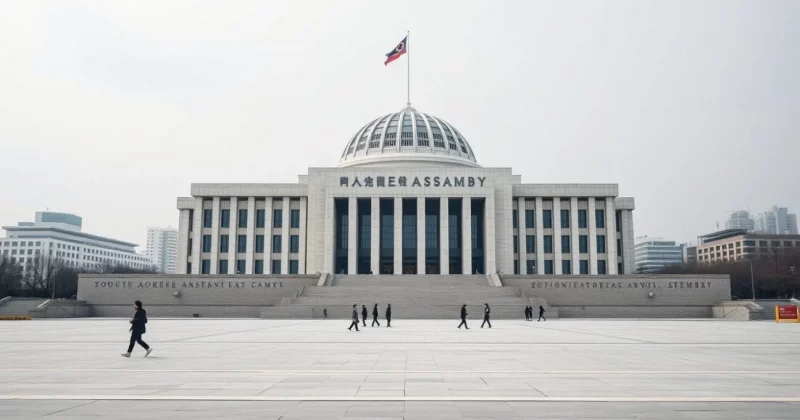
National Petition to Abolish South Korea's Virtual Asset Tax Surpasses 50,000 Signatures... Confirmed for Referral to National Assembly Amid 22% Tax Rate and Equity Controversy
On May 21, 2026, a national petition calling for the abolition of South Korea's virtual asset tax secured 50,000 signatures within eight days of its release, confirming its referral to the relevant standing committee of the National Assembly. As controversy over equity with the stock market intensifies regarding the 22% tax rate plan scheduled for implementation in 2027, attention is focused on the National Assembly's future response.
On May 21, 2026, a National Assembly public petition demanding the abolition of virtual asset taxation in South Korea surpassed 50,000 signatures, entering the official legislative review stage. This record, achieved just eight days after the petition was posted on May 13, symbolizes strong investor backlash against the taxation policy set to take effect in January 2027. With the success of this petition, the National Assembly is now legally obligated to refer the matter to the relevant standing committee for official discussion.
The petitioner argued that the virtual asset taxation system is unfair compared to other investment assets and fails to reflect market realities. In particular, the logic that applying strict taxation standards only to virtual assets—while the government has decided to abolish the Financial Investment Income Tax to revitalize the domestic stock market—violates tax equity resonated with many investors.
The rapid spread of this petition is seen as an example of the organized mobilization of virtual asset investors in South Korea. After gaining more than 14,000 signatures within a day of its start, it crossed the 50,000-signature threshold in just over a week, putting strong pressure on the political sphere.
Concerns that imposing taxes could further dampen investor sentiment amid high volatility in the virtual asset market are also cited as a major reason for the petition's support. Investors are expressing dissatisfaction with the government's attitude of rushing taxation while clear regulatory guidelines and protection measures are lacking.
According to the National Assembly's public petition system, an agenda that gains 50,000 signatures within 30 days of its release is reviewed by the National Assembly Secretariat and then forwarded to the relevant standing committee. This petition met the requirements by surpassing 50,000 signatures as of May 21, and as a result, in-depth discussions regarding the abolition or deferral of virtual asset taxation are expected to take place in committees such as the National Policy Committee or the Strategy and Finance Committee.
The principle that taxes exist where there is income is the basis of tax justice, and virtual assets can be no exception. The government will continue preparations without a hitch, aiming for implementation in 2027.
The taxation plan currently being promoted by the government centers on imposing a 22% tax rate (including 2% local tax) on income generated from the transfer and lending of virtual assets. In particular, the annual basic deduction limit is set at 2.5 million won (approximately $1,850), leading to continuous criticism that the threshold is excessively low compared to the stock market, where deduction benefits of tens of millions of won were discussed.
Controversy over Taxation Equity Between Financial Assets
Investors criticize that it is clear discrimination for the government to abolish the financial investment income tax for stock investors while imposing a tax burden only on virtual asset investors. There are concerns that this policy imbalance could lead to side effects such as capital leaving the virtual asset market and flowing out to overseas exchanges. In particular, the gap between virtual assets and the traditional stock market in terms of tax rates and deduction limits becomes even more apparent through specific comparisons.
- January 2022: Virtual asset taxation was originally scheduled to be implemented but was postponed due to reasons such as lack of infrastructure.
- January 2025: Aimed for implementation again, but postponed to 2027 considering political consensus and market conditions.
- May 13, 2026: Start of a National Assembly public petition calling for the abolition of virtual asset taxation.
- January 1, 2027: The official implementation date for virtual asset taxation currently finalized by the government.
Responses from the political sphere are also mixed. The opposition party is showing moves to meet investor demands by proposing bills to abolish the 22% tax rate plan or significantly increase the deduction limit. On the other hand, the Ministry of Economy and Finance is sticking to its position that there is no change in the 2027 implementation plan, so a fierce battle between the government and the opposition is expected during the National Assembly standing committee review process.
Experts analyze that it is uncertain whether this petition will actually lead to a law revision. Referral to the National Assembly itself does not guarantee legislation, and the government's opposition, which emphasizes securing tax revenue and tax principles, is adamant. However, as 50,000 signatures were collected in a short period, the possibility cannot be ruled out that the political sphere will come up with a compromise such as a tax deferral or an increase in the deduction limit, considering the upcoming elections and public sentiment.
The conflict surrounding virtual asset taxation is interpreted as more than just a tax issue; it is seen as growing pains occurring in the process of incorporating the Korean virtual asset market into the institutional system. While the government emphasizes the legitimacy of taxation, investors are demanding reasonable alternatives that consider the specificity and equity of the market.
The results of future discussions by the National Assembly's standing committee will be a significant watershed moment in determining the direction of the Korean virtual asset market. Market attention is focused on how the government and the National Assembly will reflect the voices of investors during the remaining period until the 2027 implementation date, and what changes will occur in the actual taxation system.



This content is for information and commentary only and is not investment advice.
Join the reader conversation
Read reactions to this article and leave your own note.