$123 Million Found in 20-Year-Old's Wallet... Interpol Cracks Down on Global Romance Scams and Announces Results of Operation 'First Light'
On July 9, 2026, Interpol announced that Operation 'First Light,' involving 97 countries worldwide, resulted in 5,811 arrests and the seizure of $293 million. Notably, $123 million in romance scam funds was discovered in the wallet of a 20-year-old arrested in Thailand, causing a shock.
On July 9, 2026, Interpol revealed the massive results of 'Operation First Light,' aimed at eradicating global financial fraud. The most notable case in this operation involved a 20-year-old arrested in Thailand, where it was confirmed that as much as $123 million (approximately 170 billion KRW) in romance scam funds had moved through a single cryptocurrency wallet. This is a symbolic case showing how technologically skilled youth are being utilized as key facilitators for organized crime in modern financial fraud networks.
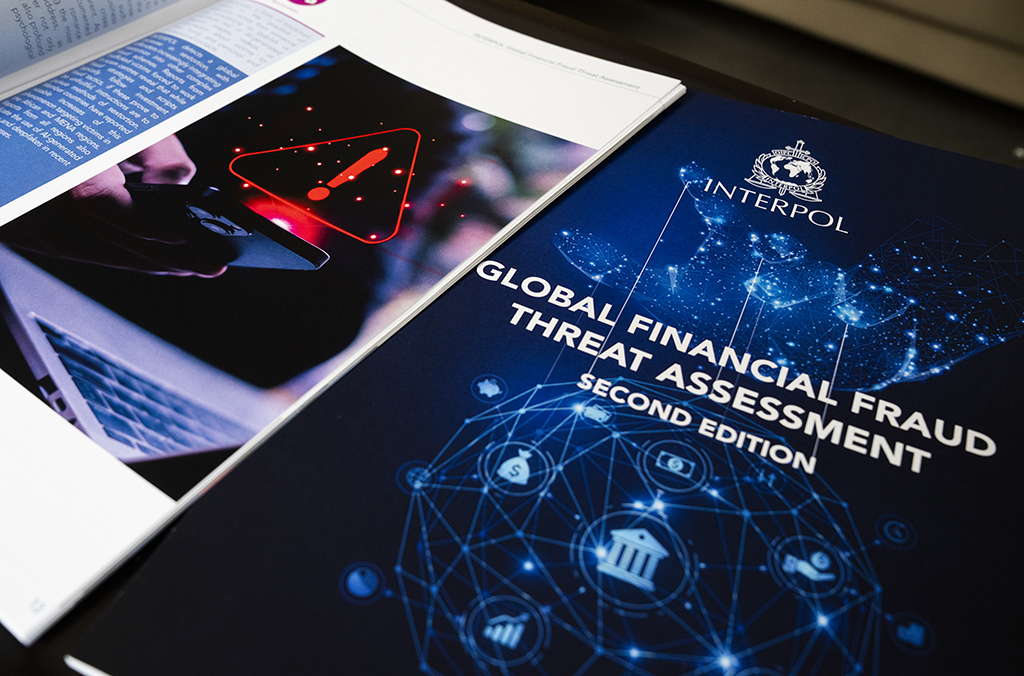
Fraud is no longer a localized threat; it stands at the center of polycriminality, where organized crime, human trafficking, and cybercrime intersect. — 2026 Interpol Global Financial Fraud Threat Assessment Report
The 20-year-old suspect arrested by Thai authorities is understood to have managed the flow of criminal proceeds, acting as a so-called 'money mule' or technical facilitator. The fact that over $100 million was processed through a single wallet suggests that romance scams have evolved beyond simple individual fraud into a highly industrialized structure. Interpol analyzed that the digital expertise of such youth is contributing to the sophistication of money laundering routes for criminal organizations, making them harder to track.
Results of 'Operation First Light' Involving 97 Countries Worldwide
Operation First Light was designed to dismantle global financial fraud networks, resulting in the arrest of 5,811 suspects and the freezing of $293 million in criminal funds. The $123 million found in the Thai youth's wallet accounted for approximately 42% of the total amount frozen in this operation, representing a massive proportion. This case demonstrates the importance of international investigative cooperation in capturing large-scale fund flows through specific hubs.
- Participating countries: 97 countries worldwide
- Total arrests: 5,811 people
- Total blocked and seized funds: $293 million
- Transaction volume of the 20-year-old Thai suspect's wallet: $123 million
Romance scams, known as 'Pig Butchering,' have evolved into a more sophisticated industrial form as of 2026, generating widespread damage. According to Interpol's report, these fraudulent methods are linked to serious human rights violations, such as confining personnel obtained through human trafficking in forced labor camps to carry out scams. Criminal organizations build trust with victims before luring them to fake investment platforms to extort funds, exploiting the anonymity of cryptocurrencies in the process.
The role of money laundering networks has also become more organized and bloated compared to the past. According to the 2026 Cryptocurrency Crime Report, Chinese-speaking Money Laundering Networks (CMLN) processed approximately $16.1 billion in illicit funds throughout 2025, averaging $44 million per day. Notably, romance scam funds tend to be laundered primarily through centralized exchanges rather than decentralized finance (DeFi) to evade tracking.
2026 Cryptocurrency Crime Landscape and the Possibility of Recovery
The volume of illicit cryptocurrency transactions reached an all-time high of $154 billion in 2025, threatening the health of the market. While this growth is driven by sanctions evasion and state-linked hacking activities, investment scams like romance scams still account for a significant portion. Nevertheless, Interpol cited the recovery of $439 million through past operations like 'HAECHI,' emphasizing that the recovery of illicit funds and the prevention of damage are entirely possible with international cooperation.
Interpol warned that future scam methods will become more intelligent by combining artificial intelligence and deepfake technology, urging countries to remain vigilant. In particular, special attention is required regarding impersonation scams that mimic government or investigative agencies, as well as investment scams promising high returns. Financial fraud has now emerged as a key factor threatening global security beyond simple economic crime, and the importance of public-private cooperation and real-time transaction monitoring to respond to it is greater than ever.
The case of the 20-year-old youth revealed in this incident is a cross-section showing how criminal organizations are recruiting tech-savvy 'Gen Z' individuals. They serve as technical shields, managing cryptocurrency wallets and operating complex fund-mixing services to make it difficult to track criminal proceeds. Investigative authorities are focusing their efforts on blocking these technical facilitators, viewing it as a key link to dismantling the entire scam ecosystem.
In conclusion, the cryptocurrency market in 2026 is growing with the dual nature of innovation and crime. The success of Interpol's 'First Light' operation demonstrated the international community's strong will to respond, but the scale of illicit funds reaching $154 billion suggests that many challenges remain to be solved. Investors should be wary of the temptations of unverified platforms, and it is a time when technical security must be accompanied by the strengthening of social cooperation systems.



This content is for information and commentary only and is not investment advice.
Join the reader conversation
Read reactions to this article and leave your own note.