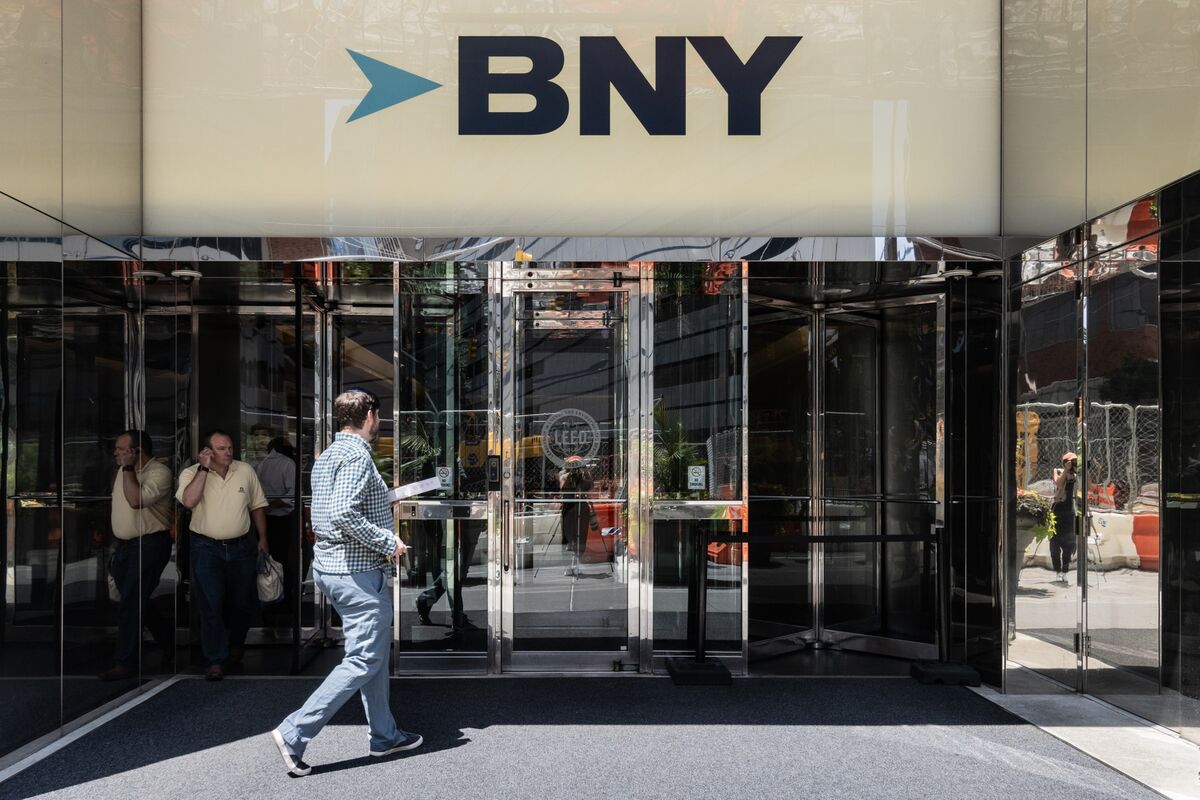
BNY Pushes for 24-Hour Continuous U.S. Treasury Settlement... Accelerating the Institutional Integration of Tokenized Assets
BNY, the world's largest custodian bank, will begin testing private blockchain-based tokenized Treasury settlements by the end of 2026. This is an attempt to resolve weekend settlement delays and transition financial market infrastructure to an 'always-on' system.
The chronic weekend settlement delays in the U.S. Treasury market are coming to an end. BNY, the world's largest custodian bank, has begun preparations to move U.S. Treasuries—the world's most important collateral asset—onto an 'always-on' digital rail. Having successfully completed after-hours pilot tests with stablecoin issuers earlier this year, BNY confirmed on July 22, 2026, that it plans to begin testing the settlement of tokenized U.S. Treasuries on a private blockchain by the end of 2026.
This attempt is a definitive signal that financial institutions are moving beyond the stage of treating tokenization as a mere experimental 'science project' and are transitioning it into actual operational environments.
BNY's goal is to eliminate the weekend gap in the U.S. Treasury settlement system. The current traditional financial system does not process settlements outside of banking hours, which limits liquidity management. By expanding its settlement network to cover more international trading hours, BNY aims to build an environment where global investors can manage their assets regardless of time zone differences.
BNY's Vision for a 24-Hour U.S. Treasury Market
Through this tokenized U.S. Treasury pilot, BNY plans to dramatically shorten settlement cycles. The private blockchain test, which will begin at the end of 2026, focuses on verifying stability in a real-world trading environment. In particular, this project goes beyond simply exploring technical feasibility; its ultimate goal is to maximize the liquidity of U.S. Treasuries—the core collateral of the global financial market—24 hours a day, 365 days a year.
- Transition from traditional T+1 settlement cycles to immediate and atomic settlement
- Securing a 24/7/365 operational system beyond standard banking hours
- Resolving settlement delays and liquidity crunches caused by weekends and holidays
- Utilizing private blockchain and distributed ledger technology instead of legacy clearing systems
BNY has already demonstrated its technical capabilities earlier this year by successfully processing after-hours Treasury trades with stablecoin issuers. This transaction served as a precursor to upcoming tokenized Treasury pilots and showed that sufficient liquidity can be secured even outside of business hours. These success stories have become important milestones for BNY as it moves toward a live trading environment using private blockchains.
These moves by BNY are part of the infrastructure modernization taking place across the financial sector. In particular, the tokenization project led by the DTCC has brought about significant changes in how major Wall Street financial firms adopt blockchain technology. This is interpreted as a strategic choice to maximize capital market efficiency, going beyond simple technology adoption.
DTCC's July Production Pilot and Infrastructure Transition
On July 15, 2026, the Depository Trust & Clearing Corporation (DTCC) launched a large-scale production pilot to tokenize stocks included in the Russell 1000 Index, major ETFs, and U.S. Treasuries. This suggests that major market infrastructure providers are moving toward real-time execution models for tokenized repo and government bond markets. The industry views this as a decisive moment where financial market infrastructure has transitioned tokenization from a mere experiment to an actual operational stage.
In terms of technical mechanisms, BNY is exploring ways to utilize 'tokenized deposits' as a means of payment. Carl Slabicki, Head of Treasury Services Platform at BNY, explained that tokenized deposits can act as a 'cash leg' for tokenized securities settlement, providing a more integrated, blockchain-native settlement experience. This is a key element that enables atomic settlement, where assets and cash are exchanged instantly on the same ledger.
Regulatory Clarity and the 2026 SEC-CFTC Framework
The regulatory environment is also supporting this innovation. On January 28, 2026, the U.S. Securities and Exchange Commission (SEC) and the Commodity Futures Trading Commission (CFTC) issued a joint statement reaffirming that tokenized securities are also subject to federal securities laws, providing institutional clarity. These guidelines have laid the foundation for institutional investors to participate in tokenization pilots without legal uncertainty.
Furthermore, the 'Harmonization Initiative' being pursued by the SEC and CFTC focuses on eliminating redundant or conflicting regulatory requirements. The goal is to clarify jurisdictional boundaries between digital assets and traditional financial products, thereby increasing operational efficiency for institutions. This regulatory progress is becoming an essential driver for moving beyond simple experimentation into the actual commercialization phase.
Market Liquidity and Balance Sheet Risks
The Federal Reserve Bank of New York has analyzed that the transition to a real-time, 24/7 settlement system could have a 'complex impact' on banks' balance sheet management and reserve requirements. As settlements occur instantaneously, total payment flows could surge, meaning banks will face new challenges in managing liquidity in real time.
In particular, in situations where the market is extremely volatile, immediate settlement risks exacerbating liquidity pressure. While settlement delays acted as a buffer in traditional systems, the 'always-on' regime causes the speed of fund movement to increase dramatically. Therefore, financial institutions are faced with the task of building risk management models suitable for this new environment.
Key points to watch in the U.S. Treasury market going forward include the results of BNY's year-end private blockchain test and whether the DTCC pilot expands into the repo market. Additionally, it is worth noting how much the SEC and CFTC's regulatory harmonization efforts will accelerate the adoption of tokenization in institutional finance. As the Treasury market, the foundation of the financial market, becomes digitized, the global financial ecosystem is entering an era of unprecedented change.
- Results of BNY's private blockchain-based tokenized Treasury test scheduled for the end of 2026
- The process of expanding the DTCC's pilot program to the repo market and UK digital Gilts
- Additional regulatory updates and guidelines through the SEC and CFTC's 'Harmonization Initiative'
- Strategies for managing bank reserves and responding to liquidity risks in a real-time settlement environment
| Date | Entity | Event |
|---|---|---|
| January 28, 2026 | SEC | Issued joint statement and guidance on tokenized securities regulatory treatment. |
| July 15, 2026 | DTCC | Launched production pilot for tokenized Russell 1000 equities and Treasuries. |
| July 22, 2026 | BNY | Announced year-end testing for tokenized Treasuries on private blockchain. |
| Late 2026 | BNY | Scheduled commencement of tokenized Treasury pilot trades. |
Key regulatory and institutional developments in the tokenized securities market during 2026.


This content is for information and commentary only and is not investment advice.
Join the reader conversation
Read reactions to this article and leave your own note.