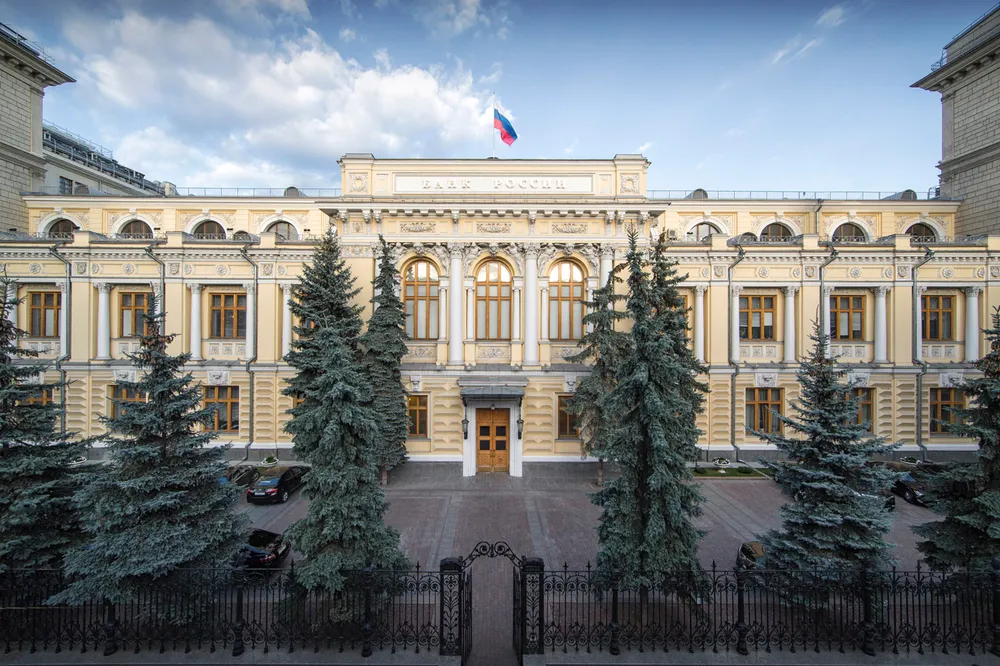
Central Bank of Russia Releases Draft Regulations for 'Organized Trading' of Cryptocurrencies
Ahead of the full implementation of cryptocurrency regulations in September 2026, the Central Bank of Russia has released draft operational guidelines, including capital standards for trading platforms and an investor classification system.
On July 28, 2026, the Central Bank of Russia released a draft of strict regulations for the 'organized' trading of cryptocurrencies, putting an end to previous regulatory ambiguity. This regulatory proposal mandates the holding of a significant level of liquid capital and includes provisions for integrating digital assets into existing financial monitoring systems, which is expected to serve as the technical foundation for a broader legislative framework to be implemented starting September 1, 2026.
This draft, announced two days ago, is part of the effort by the Russian State Duma to formalize the cryptocurrency market. The Central Bank is requiring cryptocurrency exchanges and related companies to integrate digital currencies into existing pricing, monitoring, and reporting systems used for fiat currency and securities. This is interpreted as an intention to fully absorb cryptocurrency trading into Russia's existing financial ecosystem.
These regulations reflect the Russian government's strong will to manage cryptocurrencies not as mere speculative tools, but as institutional financial assets under state control.
According to the new regulations, cryptocurrency trading platforms must hold a minimum of $2.8 million (approximately 250 million rubles) in liquid capital. Additionally, a new regulatory category called 'Digital Depository' has been established, which will be responsible for the custody and settlement of digital assets and will be subject to direct supervision by the Central Bank. These high capital barriers are expected to increase market reliability while simultaneously preventing the proliferation of small-scale, unstable firms.
Investor Classification and Trading Limits
Russian authorities are introducing a tiered investment system to protect individual investors. General retail investors will have restricted annual trading limits and must pass a risk awareness test before using the platforms. This is a measure designed to protect non-professional investors from the volatility of the cryptocurrency market.
- Non-qualified (retail) investors: Trading allowed up to a maximum of 300,000 rubles (approx. $3,300) per broker per year.
- Qualified (professional) investors: Free trading allowed without separate transaction limits.
- Mandatory licensing: All exchanges and brokers must obtain a Central Bank license by July 1, 2027.
The core of this legislation lies in the dual utilization of cryptocurrency. The Russian government is adopting a strategy of fully permitting the use of cryptocurrency for international trade settlements and sanctions evasion, while strictly prohibiting its use as a means of payment within the Russian Federation. This 'open abroad, controlled at home' stance is a move to protect the value of the ruble while simultaneously easing the constraints on international transactions.
However, the international environment is not easy. The European Union (EU) has completely banned transactions with Russian cryptocurrency service providers through a sanctions package adopted on April 23, 2026. While Russia intends to internalize $15 billion in annual overseas exchange fees and bring $70 billion worth of cryptocurrency activity under state surveillance, friction with global regulations appears unavoidable.
September 1st Implementation and Market Outlook
The main provisions of this bill, which passed parliament in July 2026, will take full effect starting September 1st. Existing platforms must meet regulatory requirements and secure official licenses by July 2027, and a major restructuring of companies unable to meet capital requirements is expected during this process.
The Russian Ministry of Finance expects an economic effect of bringing the massive fees currently paid by Russians to overseas exchanges back into the country. Once state-controlled exchanges are activated, it is expected that tax revenue will increase and Anti-Money Laundering (AML) monitoring will be further strengthened, which is evaluated as contributing to the creation of a transparent market environment.
Ultimately, this measure signifies that the Russian cryptocurrency market is moving out of the 'gray zone' and into a system of thorough state management and supervision. As Western financial sanctions persist, the global financial market is paying close attention to whether this independent digital asset infrastructure built by Russia can become a practical breakthrough for trade.



This content is for information and commentary only and is not investment advice.
Join the reader conversation
Read reactions to this article and leave your own note.