Ledger Unveils Hardware Security-Based AI Agent Stack: A New Standard for Self-Custodial Automation
On July 16, 2026, Ledger launched a 'Hardware-Based AI Agent Stack' that allows users to leverage the automation capabilities of AI agents while maintaining self-custody principles, setting a security standard for the agent economy.
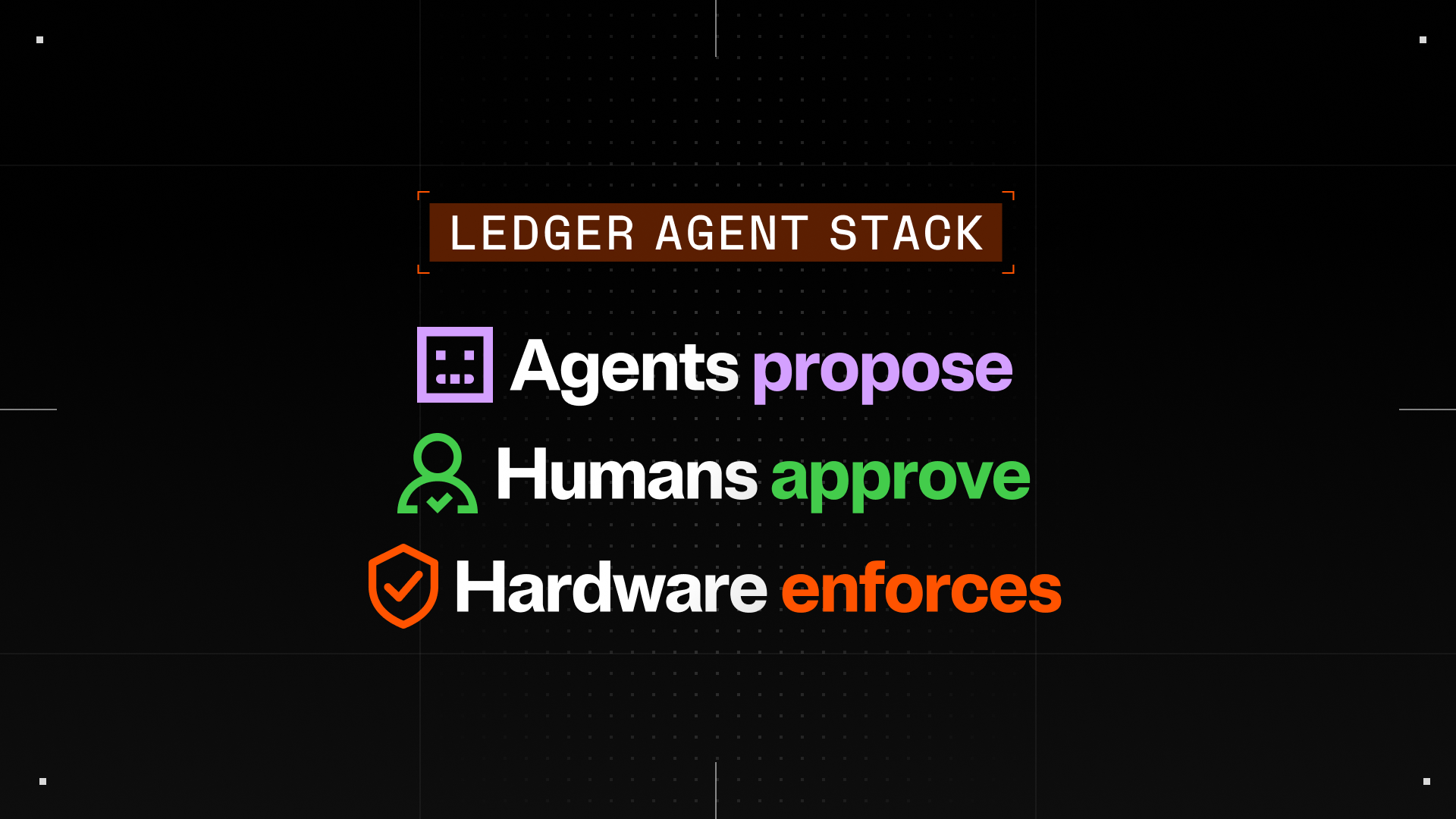
On July 16, 2026, cryptocurrency security specialist Ledger officially launched its 'Hardware-Based AI Agent Stack' to address the security challenges of autonomous financial transactions, a core issue in the 'agentic economy.' This system is characterized by allowing AI agents to propose and draft transactions while ensuring that actual private keys are never exposed outside the hardware.
Through this, Ledger aims to simultaneously satisfy AI's processing speed and the core value of the cryptocurrency industry, the principle of 'self-custody.' Users maintain final approval authority via hardware devices, creating an environment that fundamentally blocks the risk of AI agents arbitrarily seizing or misusing assets.
The newly unveiled Agent Stack provides an open toolkit that allows AI agents to perform 'read-only' tasks, such as checking wallet balances or analyzing portfolios, and drafting transactions. All sensitive operations must undergo physical approval by the user on a Ledger hardware device before execution, a measure taken to overcome the limitations of software-based security.
Software alone cannot protect a world dominated by agents. Only hardware-based security is the sole solution to counter the security threats that can arise when AI agents access money, identity, and credentials.
Ledger is focusing on solving the so-called 'Rogue AI' problem. Software-only agents are prone to becoming high-value targets for hacks or exploits, and once permissions are compromised, the user's entire asset base could be at risk. Therefore, verification through a hardware gate is explained as essential.
Technical Architecture: Agent Keys and Intents
According to Ledger's 2026 security roadmap, this stack aims to go beyond a simple set of tools to build a hardware-anchored identity and intent verification system. This serves as the technical foundation for AI agents to prove their legitimacy on-chain when acting on behalf of users.
- Agent Key: A hardware-anchored identity released in Q2 2026, acting as an unforgeable identifier registered on-chain.
- Agent Intent: A hardware-level transaction intent verification system scheduled for release in Q3 2026, verifying whether AI proposals align with the user's intent.
- Trusted Display: The final security step where the actual content of the transaction proposed by the AI is verified directly on the hardware screen and approved with physical buttons.
With this launch, Pascal Gauthier has taken on the new role of 'Chief Human Agency Officer.' This title symbolizes Ledger's philosophy that humans must remain at the center of security as the final verifiers even in an AI-driven future, presenting a model for human-AI collaboration.
To expand the ecosystem, Ledger offered $10,000 in developer prizes at the ETHGlobal New York event. Ledger plans to increase the utility of the Agent Stack by actively discovering and supporting projects that can create real user value, such as agent payments, security approvals, and hardware-based identity verification.
According to 5WPR's 2026 Crypto AI Visibility Index report, hardware wallet brands like Ledger and Trezor are highly rated for security but are lagging behind centralized custodial services like Coinbase and Gemini in popular AI prompt responses. Ledger chose to combine hardware security with AI automation to respond to these market trends.
As users increasingly prefer centralized AI services for convenience, Ledger's stack is interpreted as a strategic attempt to re-establish the position of self-custody. The core is to enjoy the efficiency of AI through hardware-based security standards while maintaining control over assets.
Ultimately, as AI agents emerge as the mainstream for cryptocurrency management, hardware-based security standards are expected to become a necessity rather than an option. Ledger's Agent Stack is projected to be an important technical bridgehead to ensure user sovereignty is not compromised in the future of automated finance.
Ledger's new security solution, announced on July 16, 2026, clearly presented the direction hardware security should take in an agent-centric ecosystem. As technology becomes more sophisticated, the value of 'human agency,' where humans maintain final control, will grow even further, and Ledger is accelerating its efforts to secure the infrastructure for this.



This content is for information and commentary only and is not investment advice.
Join the reader conversation
Read reactions to this article and leave your own note.