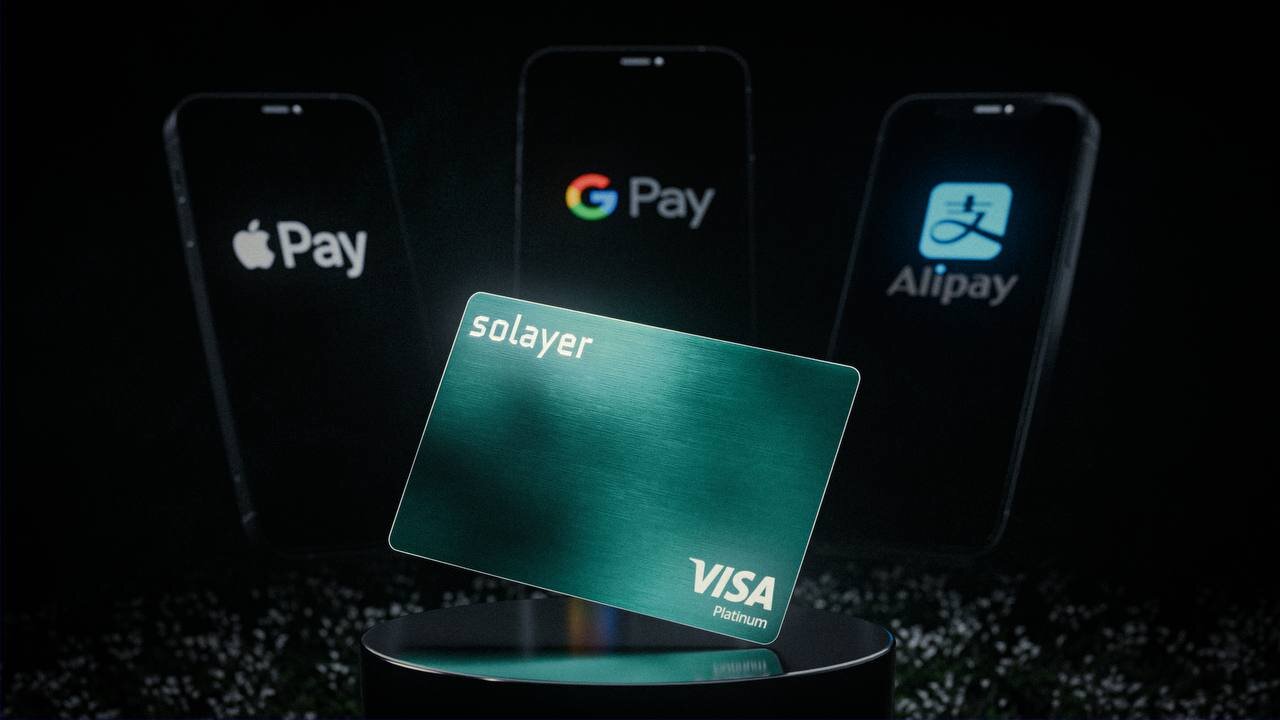
Solayer Launches Visa-Compatible Card Supporting USDC Payments... Bridging Real-World Economy and DeFi
On May 14, 2026, Solayer launched a physical card that allows USDC balances to be used for direct payments at Visa merchants worldwide. This launch is evaluated as more than just a payment method, adding profitability to stablecoins and maximizing the practical utility of on-chain assets.
On May 14, 2026, Solayer launched a Visa-compatible physical card to bridge the gap between decentralized finance (DeFi) and everyday commerce. Through this card, users can directly spend their USDC balances at millions of merchants worldwide. This marks a significant turning point, transforming stagnant stablecoin holdings into yield-generating assets with the same liquidity as traditional debit cards.
This launch represents a significant step forward in connecting blockchain-based financial infrastructure with traditional payment networks.
Orderable through the Solayer Pay app, this physical card supports in-store payments, online shopping, and contactless payments. It also allows for cash withdrawals at ATMs in supported regions, enhancing the physical utility of digital assets. Existing users can easily request card issuance within the app, and it is available to users in over 100 countries worldwide.
Yield-Generating Stablecoins: The Strengths of sUSD and sUSDC
The core differentiator of the Solayer card lies in its yield-generating mechanism that goes beyond simple payment functions. Users can earn approximately 4% Annual Percentage Yield (APY) through sUSD, Solayer's stablecoin backed by U.S. Treasuries, while maintaining liquidity for real-life payments. This is an innovative model that returns earnings directly to users, moving away from the structure where issuers monopolized interest income from stablecoin reserves.
- Solayer Pay Card: Visa network-based, provides 4% APY through sUSD/T-bill linkage, supported in over 100 countries.
- Kast Card: Visa network-based, prepaid digital wallet method, supported in over 170 countries.
- Nexo Card: Mastercard network-based, provides dual-mode integrating credit and debit.
- MoonPay Card: Mastercard network-based, targeting the global market in the form of a branded debit card.
Behind this integration lies the high-speed payment infrastructure of the Solana network. As of the end of 2025, the stablecoin supply within Solana reached approximately $14.1 billion, with USDC accounting for about $10 billion, representing an overwhelming share. Visa is also actively participating in the blockchain-based payment ecosystem by expanding its USDC payment processing volume via Solana to $3.5 billion annually.
From a macro perspective, Solayer's move is part of the process of stablecoins establishing themselves as a global payment standard. During the year 2025, stablecoin transaction volume reached $33 trillion, a 72% increase from the previous year, accounting for 30% of the total on-chain transaction volume. This data suggests that stablecoins have fully established themselves as a medium for actual value exchange beyond being a mere investment vehicle.
Technically, Solayer has combined its core competency, the Restaking protocol, with payment products. The security and liquidity foundation secured through restaking supports the stability of payment services and provides users with a full-stack financial ecosystem. Web3 projects are connected to the Solayer protocol to strengthen the security of dApps, and the structure is designed so that fee revenue generated in the process is returned to the ecosystem.
Future Outlook and Global Expansion Challenges
Solayer plans to continuously expand its service regions while prioritizing regulatory compliance. As Visa expands USDC payments in cooperation with major banks in the U.S., Solayer is also focusing on meeting international regulatory guidelines in line with these changes in institutional finance. This is an essential step for cryptocurrency-based payment solutions to build long-term trust in the mainstream financial market.
In conclusion, the launch of Solayer's Visa card is a result of meeting market demands to maximize the utility of digital assets. This model, which captures both profitability and convenience, is expected to gain a significant advantage in future competition with other fintech companies. Users can now enjoy the benefits of the on-chain ecosystem through daily consumption without having to freeze their assets.
| Card Name | Network | Yield/Reward Feature | Availability |
|---|---|---|---|
| Solayer Pay Card | Visa | 4% APY (via sUSD/T-bills) | 100+ Countries |
| Kast Card | Visa | Prepaid/Digital Wallet | 170+ Countries |
| Nexo Card | Mastercard | Dual-mode (Credit/Debit) | Global (Varies by jurisdiction) |
| MoonPay Card | Mastercard | Branded Debit | Global |
A comparison of network compatibility, yield features, and regional availability for top crypto cards.


This content is for information and commentary only and is not investment advice.
Join the reader conversation
Read reactions to this article and leave your own note.