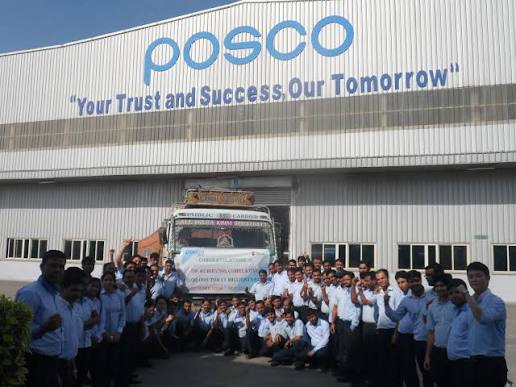
POSCO International and LG CNS Launch Injective-Based Accounts Receivable Tokenization Pilot
On July 27, 2026, POSCO International and LG CNS began a pilot project to convert actual accounts receivable into on-chain records using the Injective blockchain, accelerating the digital transformation of corporate finance.
On July 27, 2026, the Korean comprehensive business company POSCO International and IT service firm LG CNS launched a pilot program to tokenize actual commercial invoices via the Injective blockchain network. This collaboration aims to convert accounts receivable generated from trade transactions into integrated and transferable on-chain records, signaling that blockchain technology has moved beyond the experimental stage to become core financial infrastructure for corporate operations.
This pilot will set a new standard for enhancing transparency in trade finance and providing rapid liquidity to small and medium-sized partners within the supply chain.
The two companies disclosed details of the proof-of-concept project during a joint press briefing and confirmed plans to refine the solution for deployment in a production environment within 2026. The project utilizes actual trade data from POSCO International to verify technical feasibility and focuses on digitizing the complex, existing processes of accounts receivable management.
Technical Architecture Utilizing the Injective Network
This proof-of-concept project is technically distinct in its choice of the highly interoperable Injective network over traditional, closed private blockchains. The blockchain-based invoice management system not only enhances data security but also provides a technical foundation to fundamentally resolve issues such as duplicate billing and fraudulent invoices, which frequently occur in existing paper-based or fragmented digital systems.
- Integrated on-chain records: All accounts receivable are issued as unique tokens, allowing for real-time tracking of the entire process from issuance to settlement.
- Fraud prevention and security: Leveraging the immutability of blockchain to prevent invoice forgery and alteration, and to eliminate the risk of duplicate settlements.
- Improved liquidity: Streamlining factoring procedures using tokenized receivables, which dramatically increases the speed of financing for suppliers.
POSCO International is pursuing this blockchain adoption not merely as a technical implementation, but as a core task of its strategic digital transformation. The company previously announced the digitalization of global treasury management in cooperation with Hana Financial Group and Dunamu on April 29, 2026, and is moving beyond technical verification to the actual transaction application stage to increase the efficiency of large-scale cross-border payments.
LG CNS is leading the technical implementation of this project based on the blockchain capabilities it has accumulated through the development of Monachain in the past. LG CNS provides digital transformation (DX) technology optimized for enterprise software environments and aims to expand enterprise blockchain applications that can be used in the global trade finance market beyond local solutions.
In terms of supply chain finance, invoice tokenization is a key that opens up the possibility of 'deep-tier' financing. This allows not only primary suppliers but also lower-tier small and medium-sized suppliers to quickly secure working capital by utilizing on-chain receivables issued based on the creditworthiness of large corporations, thereby strengthening the financial health of the entire supply chain ecosystem.
POSCO International's recent financial moves are also in line with this digital innovation. The company issued $500 million in global bonds for the first time since its founding on July 10, 2026, and is accelerating the expansion of its global value chain, such as by unveiling a new CI for its Indonesian palm oil subsidiary in June. Amid this growth, efficient blockchain-based treasury management is considered an essential element.
However, for full-scale adoption, there remain challenges to overcome beyond technical maturity, including regulatory barriers. Establishing the legal status of on-chain assets and achieving seamless integration with existing legacy financial systems are key factors to be addressed in the future, and industry experts expect this pilot to be an important milestone for the Real World Asset (RWA) tokenization market in South Korea.
In conclusion, this collaboration between POSCO International and LG CNS is a blueprint for the future of corporate finance in Korea. This case, where blockchain technology combines with the real economy to maximize the efficiency of trade finance, suggests the possibility of expansion into other industrial sectors in the future and will serve as an opportunity to enhance competitiveness in the global market.


This content is for information and commentary only and is not investment advice.
Join the reader conversation
Read reactions to this article and leave your own note.