CleanSpark Signs $6.6 Billion AI Infrastructure Lease Agreement: Strategic Shift from Bitcoin Mining to HPC
Bitcoin mining firm CleanSpark is entering the AI data center market by signing a 20-year long-term lease agreement with a global technology company. The deal, expected to generate $6.6 billion in revenue, faces the challenge of raising $2.1 billion for large-scale infrastructure construction.
On July 14, 2026, Nasdaq-listed CleanSpark announced that it had signed a 20-year infrastructure lease agreement with a global blue-chip technology company. The contract is projected to generate approximately $6.6 billion in revenue and will serve as a significant turning point in shifting its business structure from Bitcoin mining to high-performance computing (HPC) and AI infrastructure. The stock price surged more than 12% immediately after the announcement, reflecting high market expectations.
This agreement will serve as an opportunity for CleanSpark to leap beyond being a simple Bitcoin miner to becoming a key player in the global AI infrastructure market.
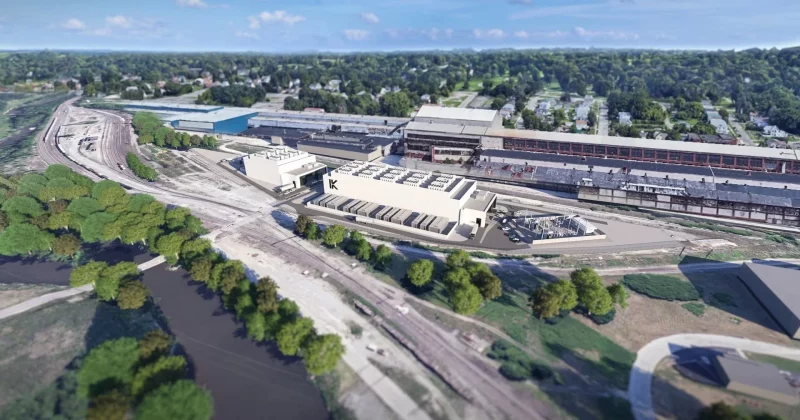
The agreement, targeting the Sandersville campus in Georgia, includes two five-year extension options in addition to the initial 20-year lease period. If all extension options are exercised, total expected revenue could reach up to $12 billion, a scale that overwhelms CleanSpark's existing mining revenue model. Through this contract, the company has secured a long-term and stable revenue source.
Technical Specifications and Delivery Schedule of the Sandersville Project
The Sandersville facility is designed to accommodate a critical IT load of 175 MW, which is essential power capacity for large-scale AI data center operations. CleanSpark plans to begin full-scale infrastructure delivery starting in the fourth quarter of 2027, and it is expected to take more than a year of preparation before actual revenue is generated. The stable supply of large-scale power infrastructure is expected to be the key to the project's success.
- Contract Term: Initial 20 years (including two 5-year extension options)
- Estimated Revenue: Approximately $6.6 billion based on the initial term
- Facility Capacity: 175MW in Sandersville, Georgia
- Delivery Timing: Scheduled to commence in Q4 2027
The Sandersville contract is a stepping stone for CleanSpark's larger expansion. The tenant has already signed a Letter of Intent (LOI) and secured exclusive negotiation rights for CleanSpark's entire Texas portfolio of 885MW. If the Texas expansion materializes, CleanSpark's AI infrastructure capacity will increase to more than five times the currently contracted level, positioning it as one of the largest AI data center operators in North America.
The market reacted immediately to this announcement, with the stock price surging. This demonstrates that investors are positively evaluating the shift to AI infrastructure in a market environment where underlying assets like Bitcoin fell by 36% during the first half of 2026, while cryptocurrency-related stocks rose by 23%. Investors are placing higher value on predictable rental income over volatile mining revenue.
$2.1 Billion Financing Challenge
Despite signing the large-scale contract, CleanSpark faces the challenge of raising approximately $2.1 billion in construction costs. As of Q2 2026, CleanSpark's shareholder equity stands at approximately $2.175 billion, meaning the required construction funds are nearly equal to the company's current total capital. This scale could place a significant burden on the company's financial structure.
The fact that specific financing terms have not yet been disclosed acts as a potential risk for investors. If new shares are issued during the large-scale capital raising process, there is a possibility that the value of existing shares will be diluted, which could be a significant variable for future stock price trends. Experts are watching to see whether CleanSpark will secure funds through debt financing or strategic partnerships.
Bitcoin mining companies are turning to AI hosting to escape the volatility of the halving cycles that repeat every four years and to secure stable revenue streams. The 20-year long-term lease model is evaluated as an attractive strategic option because it provides a fixed cash flow regardless of Bitcoin price fluctuations. CleanSpark's move symbolizes a structural change across the industry.
Operational Risks and Key Points to Watch
It is reported that the contract terms include penalty clauses such as rent reductions or contract termination if the delivery deadline of the fourth quarter of 2027 is not met. Therefore, CleanSpark's ability to meet construction deadlines and its execution capabilities are expected to be key factors in determining its future corporate value. Technical defects or schedule delays could lead to significant financial losses.
Through this contract, CleanSpark is seeking to transform from a simple mining company into a high-value-added data center developer. The successful completion of the Sandersville project and whether the Texas portfolio is converted into a definitive agreement are expected to determine CleanSpark's long-term success or failure. The full-scale infrastructure construction process, set to begin in the second half of 2026, will serve as a test to prove market confidence.

This content is for information and commentary only and is not investment advice.
Join the reader conversation
Read reactions to this article and leave your own note.