
DoorDash's Strategic Shift: Integrating Stablecoins as Core Labor Infrastructure Across Over 40 Countries
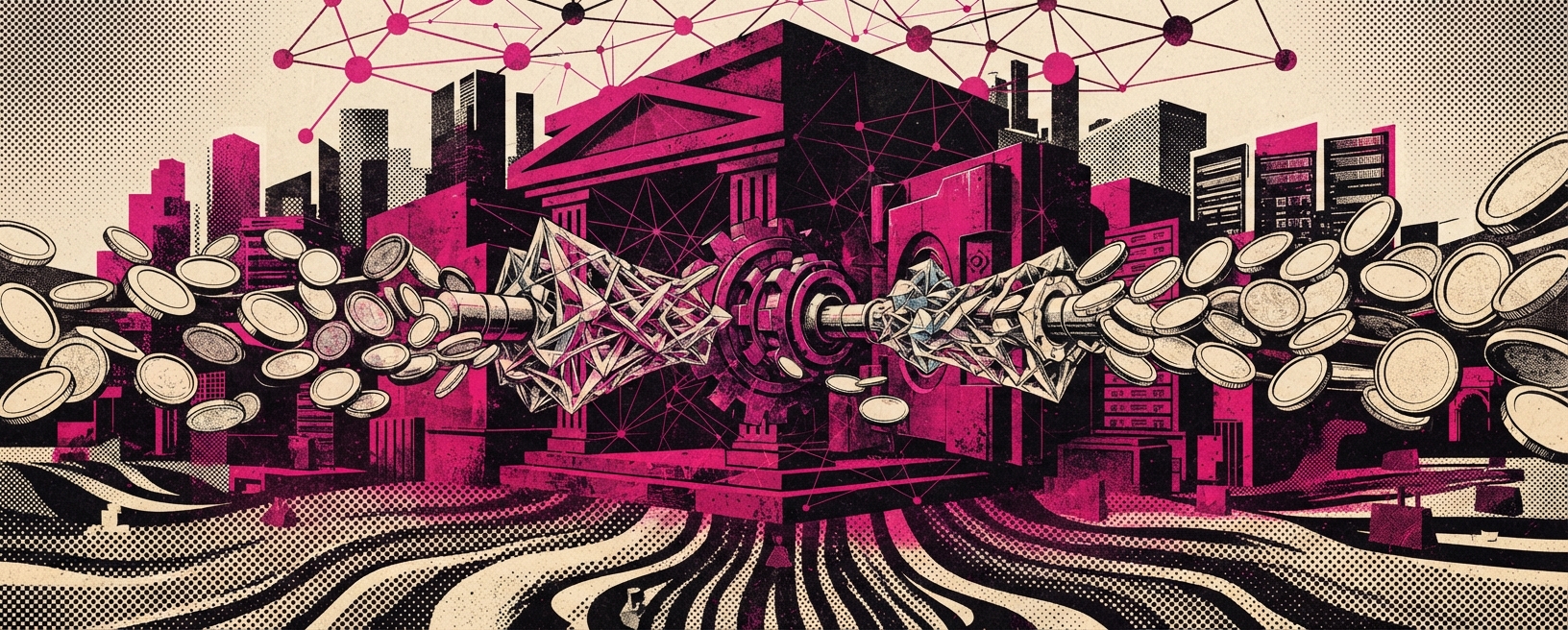
DoorDash is adopting the Tempo blockchain to address inefficiencies in traditional cross-border finance, establishing a stablecoin-based settlement system for couriers and merchants in over 40 countries worldwide.
DoorDash has announced a major shift in its global operations by integrating a stablecoin-based settlement system into its operating systems across more than 40 countries. Announced on April 21, 2026, this move is part of building core infrastructure to bypass the inefficiencies of traditional cross-border banking systems and provide faster, lower-cost payments to couriers (Dashers) and merchants worldwide.
A payment flow that works in Atlanta doesn't work in Helsinki. The logistics system for paying couriers in one country looks nothing like the system in another.
DoorDash is building its stablecoin payment infrastructure on Tempo, a Layer-1 blockchain incubated by Stripe and Paradigm. This represents a shift of core infrastructure affecting users, merchants, and couriers alike, rather than just a simple pilot, and will utilize Tempo's enterprise features to handle large-scale marketplace workloads.
Friction and Inefficiency in Traditional Global Settlements
Currently, DoorDash pays millions of couriers and thousands of merchants across more than 40 countries. Each market has different payment networks, exchange rate dynamics, settlement schedules, and regulatory requirements, making global settlement management extremely fragmented. Unlike domestic settlements, international settlements must navigate complex financial paths.
- Fragmentation of payment networks and regulatory environments varying by country
- Increased costs due to foreign exchange (FX) spreads and intermediary bank fees
- Settlement delays and liquidity constraints caused by complex intermediary processes
The Tempo blockchain addresses these issues by providing sub-second settlement speeds and fixed transaction fees. Private transaction channels designed specifically for enterprise users ensure both security and efficiency, offering technical advantages optimized for high-frequency transaction environments like DoorDash's. This becomes a key driver in overcoming the physical and temporal constraints of existing financial networks.
With the introduction of this infrastructure, couriers and merchants will enjoy direct economic benefits. As FX spreads and intermediary fees are reduced, couriers can increase their actual earnings, and merchants are expected to maximize operational efficiency through faster access to capital. This results in accelerating the velocity of money across the gig economy ecosystem.
Economic Scale and Market Background
DoorDash's decision is backed by the company's massive transaction volume. According to the Q4 2025 report, DoorDash processed 903 million orders in that quarter alone, with a total order value of $29.7 billion. It is interpreted that the introduction of a unified blockchain-based settlement network was essential to efficiently manage such a vast amount of capital.
The company is scheduled to announce its Q1 earnings on May 6, 2026. This announcement of building stablecoin infrastructure is analyzed as a strategic move amid ongoing stock price volatility, intended to secure market confidence by reducing operating costs and strengthening global scalability.
Broad Industry Trend of Stablecoin Integration
DoorDash's move aligns with a broader industry trend of mainstream companies moving toward on-chain settlements, such as Stripe's recent acquisition of the stablecoin platform Bridge. This suggests that stablecoins are moving beyond simple investment assets to become payment and labor infrastructure for actual businesses, showing that the boundaries between fintech and crypto are blurring.
However, maintaining a seamless interface for consumers even during complex back-end blockchain migrations remains a future challenge. DoorDash plans to focus on optimizing the 'last mile' experience to ensure the technical transition does not hinder user experience, and attention is focused on whether this adoption can change the settlement standards for global gig workers.

This content is for information and commentary only and is not investment advice.
Join the reader conversation
Read reactions to this article and leave your own note.