Instability After the Evian Summit: Analyzing the Political Survival of G7 Leaders Through Prediction Market Data
Behind the unity of the June 2026 Evian G7 Summit lies a serious domestic political crisis facing each leader. Amid the resignation of the French Prime Minister and low approval ratings in the US, prediction markets are closely watching the moves of Macron and Trump.
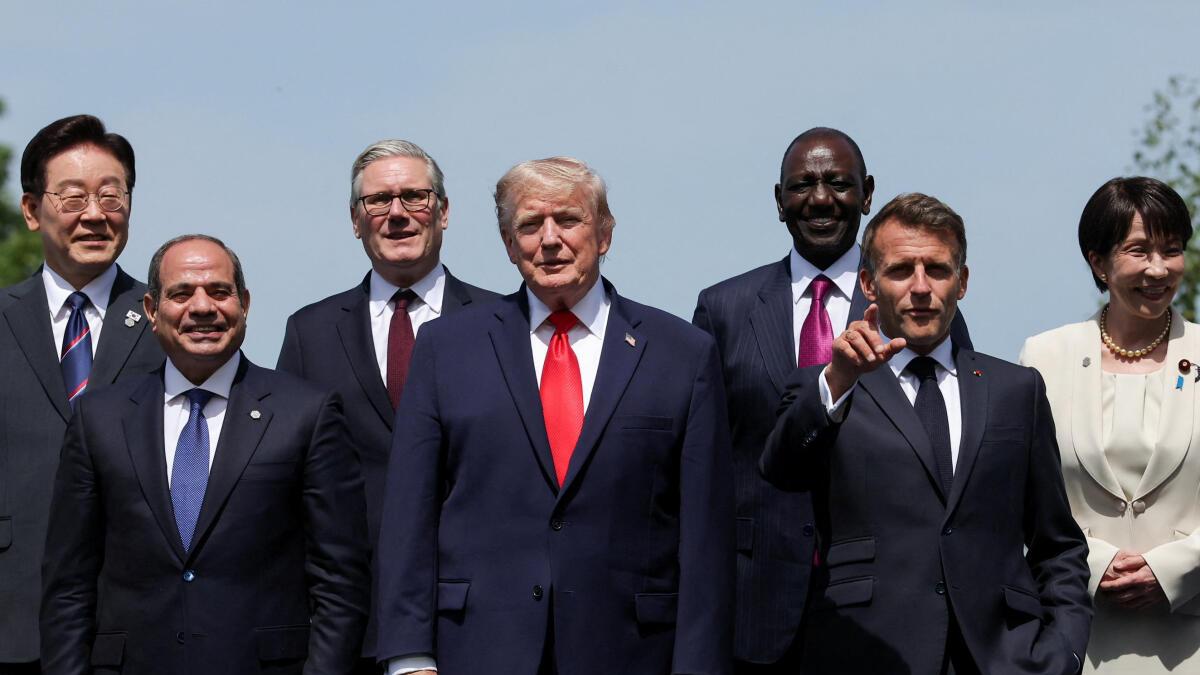
Just weeks after the conclusion of the G7 Summit held in Évian-les-Bains, France, in June 2026, the 'family photo' of leaders symbolizing international unity is being shaken by severe domestic political volatility in various countries. As of July 15, 2026, prediction markets see a low probability of immediate, drastic leadership changes, but the recent resignation of the French Prime Minister and the low approval ratings of the U.S. President are sending significant ripples through global markets.
In particular, the sudden announcement of the French Prime Minister's resignation on July 7, 2026, has amplified doubts about President Emmanuel Macron's leadership. Simultaneously, the stagnation in approval ratings for U.S. President Donald Trump, now in his second year in office, suggests that the stability of G7 leadership is more fragile than ever.
This analysis combines data from major prediction markets such as Kalshi with the latest political indicators from each country to take an in-depth look at the market's perspective on which G7 leader will be the first to leave office.
The 2026 G7 Summit held in Evian last month signaled the beginning of a generational shift with the new participation of Japanese Prime Minister Sanae Takaichi and British Prime Minister Keir Starmer. However, despite the emergence of these new leaders, the leadership of France and the U.S.—the central pillars of the meeting—appears increasingly unstable due to domestic political pressure. The prevailing assessment is that the diplomatic achievements in Evian failed to resolve the internal political issues of the respective nations.
The harmony in Evian was merely temporary diplomatic rhetoric; the leaders have now returned to the more difficult battlefields of their national parliaments and public opinion.
According to mid-July 2026 data from Kalshi, a political prediction market, French President Emmanuel Macron ranks highest in the 'Next G7 Leader to Exit' category with a 0.3% probability. US President Donald Trump and Canada's Mark Carney follow with a 0.1% probability each. Although the absolute figures are low, it shows that the political crisis facing President Macron is perceived as the most substantial threat by market participants.
Macron's 'Political Chaos': France's Legislative Crisis
- On July 7, 2026, Prime Minister Sébastien Lecornu resigned, leaving the Macron government facing an administrative vacuum.
- President Macron is currently under intense pressure to resolve the legislative deadlock caused by the failure to secure a majority in parliament.
- French political circles view the budget processing deadline scheduled for December 31, 2026, as the final deadline that will determine Macron's political survival.
In the United States, President Donald Trump has reached the 539th day of his second term but remains stuck in a swamp of low approval ratings. According to The Economist's tally as of July 7, 2026, Trump's net approval rating stood at -23 points, maintaining a poor performance of 36% approval versus 59% disapproval. The fact that his approval rating, which once rose to 42% last April, has turned downward again signifies that a serious warning light has been lit for his policy momentum.
Stability of the New Generation and Canada's Variable
In contrast to the intense internal strife in France and the United States, UK Prime Minister Keir Starmer and Japanese Prime Minister Sanae Takaichi are securing relatively stable approval ratings in the early stages of their terms. They demonstrated their presence as the 'New Guard' at the Evian Summit, distinguishing themselves from existing leaders. The fact that their possibility of exit is hardly mentioned in current prediction markets reflects market confidence that their leadership will continue for the time being.
Meanwhile, the inclusion of Canada's Mark Carney in the prediction market despite not being the incumbent Prime Minister shows the market's high interest in future Canadian political reorganization. The direction of G7 leadership in the second half of 2026 ultimately depends on whether France passes its December budget and whether President Trump's approval rating recovers following changes in US economic indicators. Global investors must keep a close eye on this chain of political uncertainty that will continue until the end of 2026.
| Leader | Country | Status/Approval | Exit Probability (Kalshi) |
|---|---|---|---|
| Emmanuel Macron | France | PM Resigned July 7 | 0.3% |
| Donald Trump | United States | 36% Approval (July 7) | 0.1% |
| Mark Carney | Canada | Political Entry Rumors | 0.1% |
| Sanae Takaichi | Japan | In Office (Evian 2026) | N/A |
| Keir Starmer | United Kingdom | In Office (Evian 2026) | N/A |
Comparison of current G7 leaders, their domestic approval, and market-implied exit probabilities.
Track the linked Kalshi market
This article is connected to a live Kalshi event. Review the linked chart below or open the full event on Kalshi.



This content is for information and commentary only and is not investment advice.
Join the reader conversation
Read reactions to this article and leave your own note.