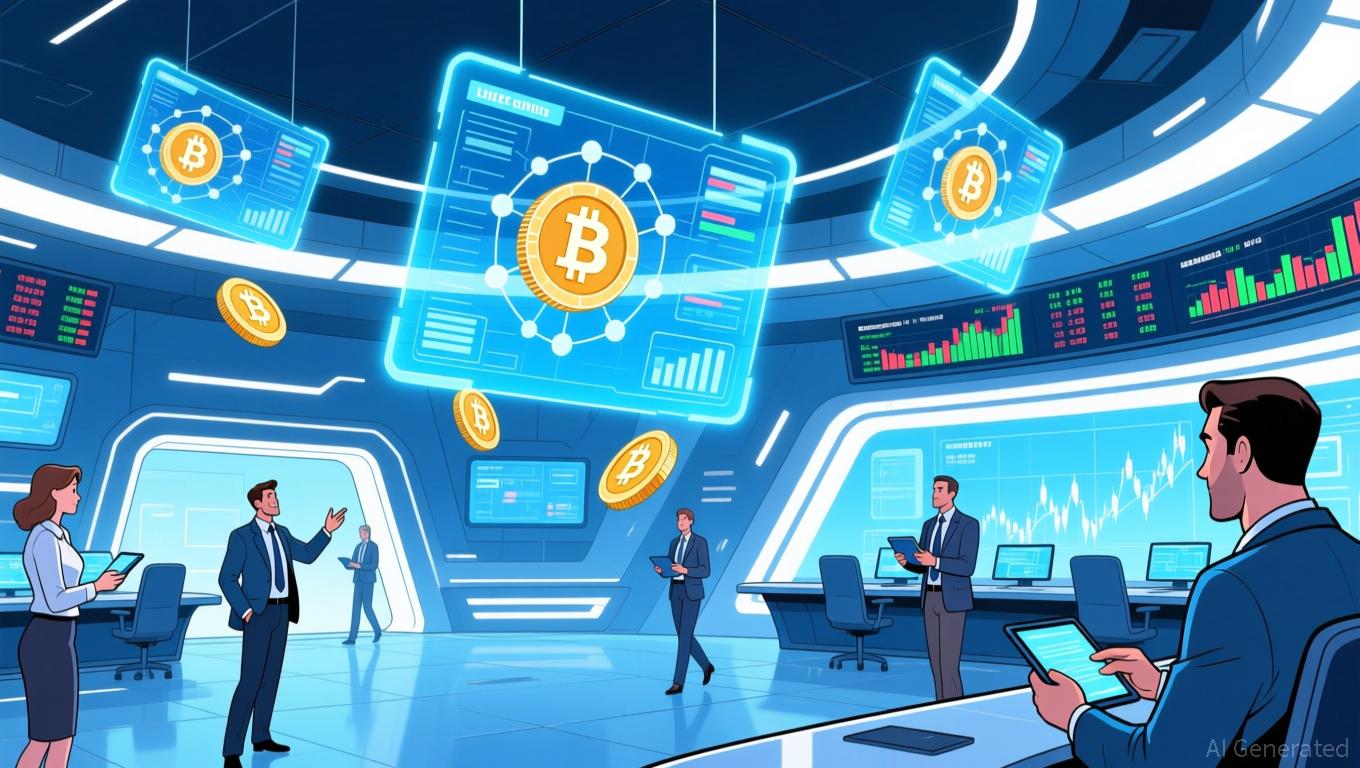
DTCC Enters Live Trading Phase for Tokenized Securities: Accelerating Blockchain Transformation of Wall Street's Financial Infrastructure
The Depository Trust & Clearing Corporation (DTCC) has set a significant milestone in financial market modernization by launching live operational trading of tokenized securities in July 2026. Major assets, including Russell 1000 index components and U.S. Treasuries, have begun trading on the blockchain.
The Depository Trust & Clearing Corporation (DTCC), a core clearing institution for the U.S. financial markets, officially launched live production trades of tokenized securities in July 2026. This marks a decisive moment where blockchain technology moves beyond the experimental stage and is integrated into actual financial infrastructure on Wall Street. World-class asset classes, such as Russell 1000 Index stocks and U.S. Treasuries, have begun to be processed in real-time on a distributed ledger.
DTCC's first live trade using tokenized securities is a milestone that demonstrates how blockchain can reshape the infrastructure behind Wall Street.
This July launch is considered a 'soft launch' or 'limited production' phase ahead of full-scale commercialization. DTCC had already announced this production schedule last May, and as of July 16, 2026, actual trades are being conducted stably on the network. This signifies an entry into an operational environment where real capital moves, going beyond simple technical testing.
Core Market Assets: Scope and Targets of Tokenization
The assets being tokenized in this phase consist of core stocks that form the backbone of the U.S. market. These assets remain in custody at the existing DTC while being issued in token form on the blockchain for trading and settlement. Tokenized assets hold the same rights as traditional securities and have legal effect.
- Stocks included in the Russell 1000 Index
- U.S. Treasuries
- Major Exchange-Traded Funds (ETFs)
More than 50 global financial institutions participated in this project, forming a massive coalition. It includes not only traditional financial giants such as JPMorgan Chase, Goldman Sachs, BlackRock, and Citigroup but also a large number of digital asset specialists like Circle and Ondo Finance. This broad participation demonstrates a strong consensus within the financial sector regarding tokenization technology.
Technically, the Canton Network, developed by Digital Asset, plays a pivotal role. This architecture aims to verify whether blockchain can operate reliably in high-capacity settlement environments by tokenizing existing custodial assets. In particular, it is designed to serve as a bridge between traditional financial systems and decentralized finance (DeFi).
Tokenization Trends Across the Ecosystem
DTCC's latest move is in line with the overall market trend toward tokenization. Yesterday, on July 15, 2026, Cantor Fitzgerald and Securitize announced a partnership for on-chain capital raising and tokenized IPOs. This establishes a path for companies in public markets to raise funds directly through blockchain.
Also on the same day, July 15, Aave launched V4 on the Avalanche network, laying the groundwork for the tokenized Real-World Asset (RWA) lending market. These movements suggest that the entire process of financial assets—from issuance to distribution and lending—is moving onto the blockchain. Startups like Glacis Labs are also joining this ecosystem, raising funds to expand multi-chain clearing platforms.
Currently, Wall Street is struggling to address operational pressures resulting from the transition to a T+1 settlement cycle. As legacy infrastructure reaches its limits due to a surge in data volume and tightening regulatory requirements, building near-real-time settlement systems through tokenization has emerged as an essential solution to increase market efficiency. Blockchain is identified as a key technology to resolve these settlement bottlenecks.
Based on the results of the limited production transactions this July, DTCC plans to launch a full-scale commercial service in October 2026. The success of these live transactions is expected to serve as a barometer for the speed at which a wider variety of asset classes will be integrated into blockchain-based infrastructure in the future. Wall Street is now moving past experimentation toward a new financial standard based on blockchain.

This content is for information and commentary only and is not investment advice.
Join the reader conversation
Read reactions to this article and leave your own note.