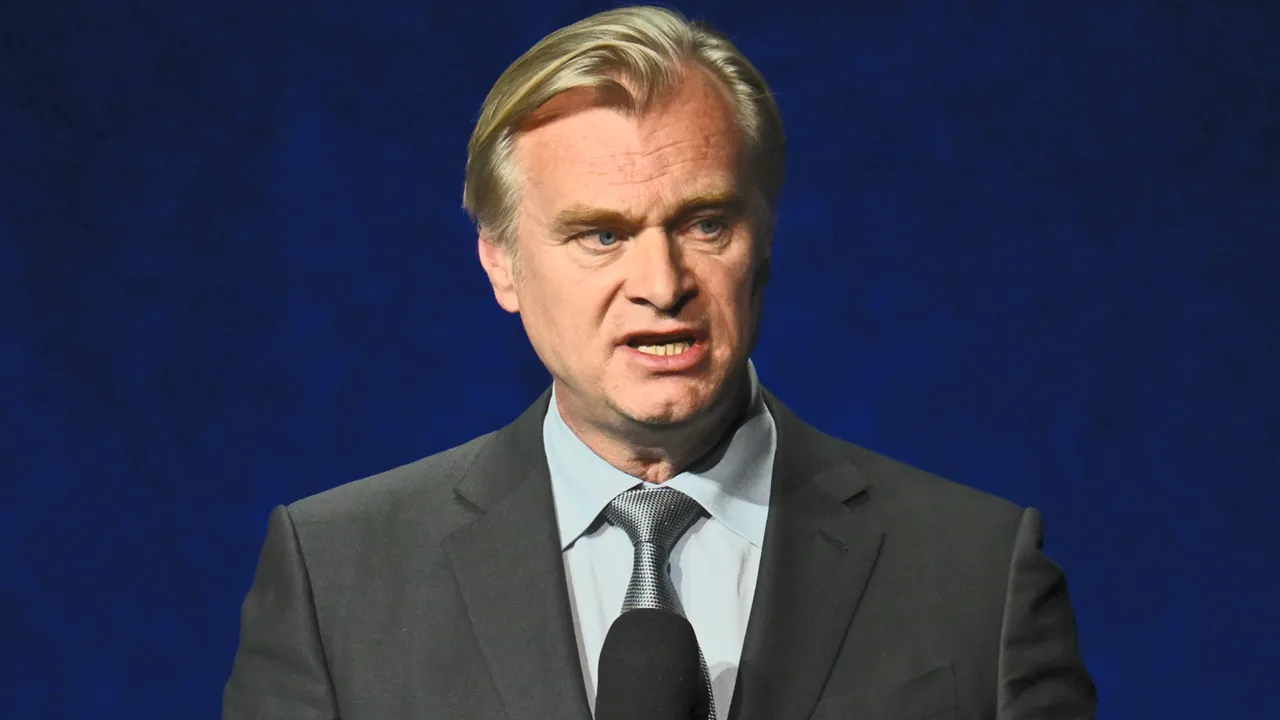
Christopher Nolan ahead of 'Odyssey' release: "Gen Z has passed an immediate and harsh judgment on AI slop"
Director Christopher Nolan emphasized the importance of live-action filming, noting the younger generation's aversion to generative AI content ahead of the release of his new film 'Odyssey'.
Ahead of the worldwide release of his new film 'Odyssey' on July 17, 2026, director Christopher Nolan has found an unexpected ally for his long-held belief in practical effects. In a recent interview, Nolan diagnosed that the younger generation is already feeling fatigued by so-called 'AI Slop'—content indiscriminately produced by generative AI—and is resolutely rejecting it. This suggests the emergence of a new audience that values the creator's intent and a sense of reality over technical perfection.
AI arrived in the filmmaking environment at exactly the 'wrong time.' The current creative current is flowing toward a longing for human ingenuity and tangible reality rather than technical automation.
Nolan, who is also the president of the Directors Guild of America (DGA), explained that Gen Z's verdict on AI content is "immediate and harsh." He noted that the backlash against AI-generated material is appearing much faster than industry analysts predicted. He analyzed this phenomenon not merely as an antipathy toward technology, but as a yearning for authentic narratives and art touched by human hands.
A 60-Foot Tangible Rival: 'Odyssey'
Nolan's new film 'Odyssey' is regarded as the culmination of this philosophy. According to lead actor Matt Damon, one of the film's highlights is a 60-foot-tall Cyclops puppet that was actually built, rather than being a digital graphic. To recreate the mythical giant, the production team filmed at the Psychro Cave, known as the birthplace of Zeus, maximizing physical presence.
- Young audiences value brand values and background stories over direct sales messages.
- As resistance to generative AI advertising spreads, preference for human-made content is surging.
- Gen Z and Alpha generations demand narratives that allow for interaction and community formation beyond simple consumption.
- They place higher value on results that contain human struggle and creative challenges in the production process rather than technical perfection.
The market response is enthusiastic. 'Odyssey' is projected to earn between $80 million and $100 million in North America alone during its opening weekend. In particular, a significant portion of early bookings is concentrated in IMAX theaters, showing that Director Nolan's enthusiastic cinephile base craves an overwhelming visual experience through large formats.
At the world premiere held in London on July 6, 2026, Hollywood top stars including Matt Damon, Anne Hathaway, Zendaya, and Tom Holland turned out in full force to support the work. Foreign media are calling this phenomenon 'Barbenheimer for the Classics Department,' noting the cultural impact created by the meeting of modern reinterpretations of classical literature and live-action filming technology. In an era of accelerating automation, the massive festival created by human actors and production crews is becoming a powerful marketing tool in itself.
Director Nolan highly praised the practical originality shown by emerging creators such as Kane Parsons and Curry Barker, mentioning that they are brightening the future of the film industry as an alternative to AI. He made it clear that technology should not replace creators but remain a tool for realizing the creator's vision. The activities of these newcomers prove that human-centered creation is still valid not only in big-budget blockbusters but also in the independent film world.
Marketing trends for 2026 and 2027 are also returning to being 'human-centered.' While consumers use ChatGPT daily, they tend to show resistance when they discover traces of AI in the entertainment and advertisements they consume. In this environment, the 'Human-made' label is likely to become a premium brand strategy that Hollywood production companies can promote over the next decade.
The film is scheduled to use IMAX screens worldwide exclusively for the first three weeks after its release to drive box office success. This is part of a strategy to impress upon audiences that this work is not just a video, but a massive physical event that can only be experienced in theaters.
In conclusion, the box office success of 'Odyssey' will be an important indicator of the future direction of the film industry. If Nolan's success is proven, Hollywood will have a justification for returning to the traditional method of investing more capital in live-action filming and human creativity rather than cost reduction through AI. This is expected to serve as an opportunity to reaffirm the intrinsic value of film as a medium in an era of technological omnipotence.



This content is for information and commentary only and is not investment advice.
Join the reader conversation
Read reactions to this article and leave your own note.